Article analysis: Transforming education: Analyzing Sam altman’’s vision of AI-powered personalized learning
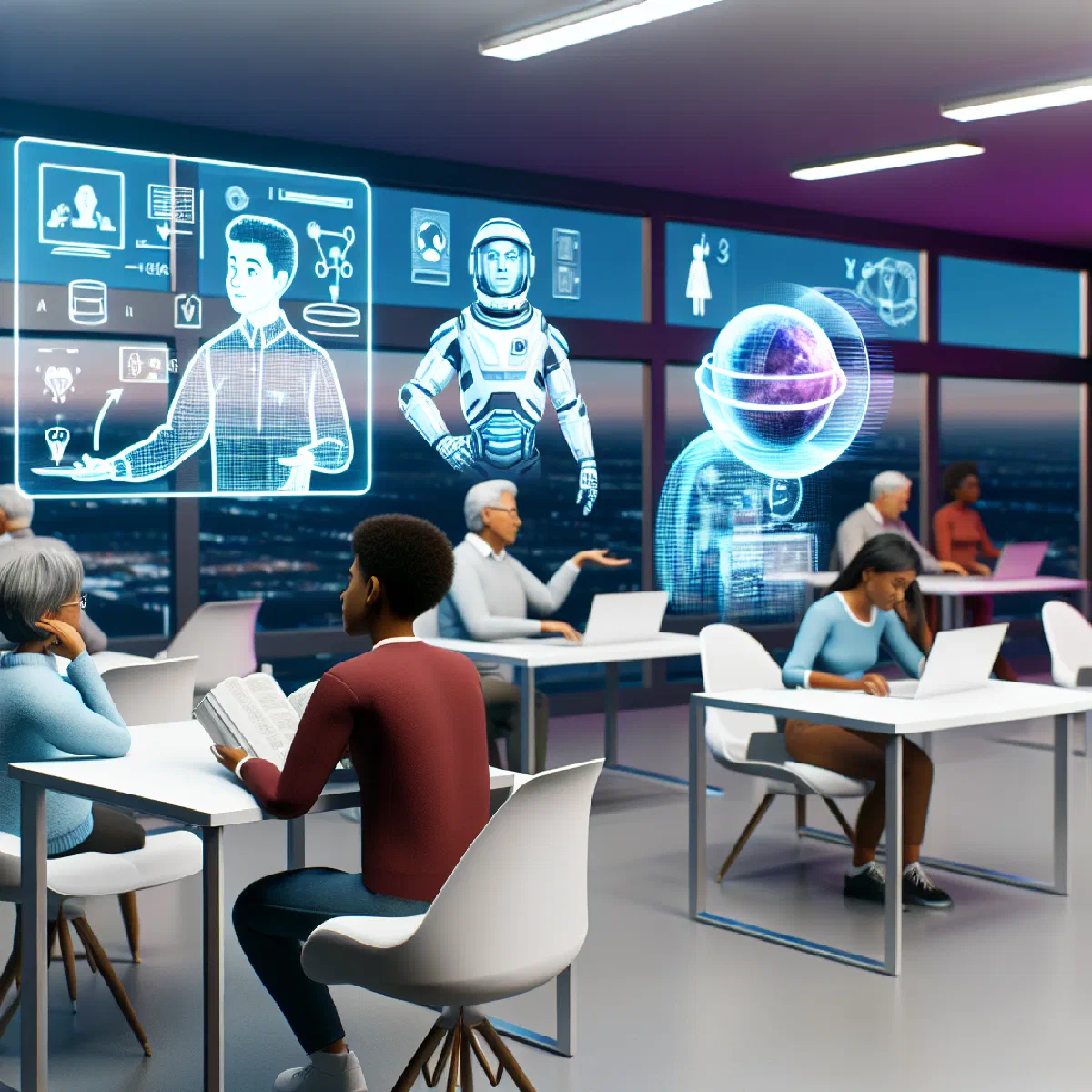
Explore Sam Altman's vision for AI-driven personalized learning, revolutionizing education with virtual tutors and fostering critical thinking for future...
“Our children will have virtual tutors who can provide personalized instruction in any subject, in any language, and at whatever pace they need.”
How ChatGPT Boss Sam Altman’s New AI Predictions Affect Education
The revolutionary promise of AI in education
In his recent blog post, Sam Altman presents a compelling vision for the future of education, driven by advancements in artificial intelligence. As the CEO who introduced ChatGPT, Altman’s insights carry significant weight in the discourse on tech-powered learning.
Personalized virtual tutors
Altman foresees a world where every child has access to a personal AI tutor, available anytime, tailoring instruction to individual needs. This paradigm shift could democratize education, ensuring high-quality, personalized learning experiences regardless of socio-economic status or geographical location.
Beyond memorization to innovation
Altman argues for a transformation from traditional rote learning to fostering critical thinking and problem-solving skills. With AI, students could collaborate on real-world challenges and contribute to scientific advancements, fundamentally altering the educational landscape.
Job market preparation
Addressing potential disruptions to the job market, Altman emphasizes the importance of adaptability and lifelong learning. As certain job roles evolve or become obsolete, AI-infused education must equip students with entrepreneurial and innovative skills to thrive in a dynamic workforce.
The controversial timeline
Altman’s optimistic timeline for achieving superintelligence—suggesting just a few years—raises eyebrows. Critics might view this as overly ambitious or influenced by OpenAI’s fundraising activities. Nonetheless, Altman’s position grants him unique insights into AI’s rapid progress, providing some credibility to his predictions.
Call to action
Altman urges a strategic approach to harnessing AI in education. Key priorities include equitable access, addressing ethical concerns, and training educators to effectively employ AI tools. By adapting to these changes, we could witness an era of unparalleled educational progress and innovation.
While Altman’s vision is inspiring and forward-thinking, it is crucial to critically evaluate the feasibility and implementation challenges. Grounding these ambitious ideas in practical strategies will be essential for realizing AI’s transformative potential in education.
Nobody takes you aside anymore
Print taught a generation when to stop. What we lose when the machines absorb the constraints that used to form us.
Your AI agents need a water cooler
Coordination is a property of the room, not the org chart. What that means when your coworkers are agents.
On the death of the author and the birth of the detector
Why worrying about AI authorship is lazier, and more prejudiced, than it looks.
The work of being available now
A book on AI, judgment, and staying human at work.
The practice of work in progress
Practical essays on how work actually gets done.
The Principle of Sufficient Alternatives
Rules for a healthy software niche/ecosystem
Article analysis: Harnessing agentic AI: Transformative potential, data foundations, and future work dynamics
Explore how agentic AI transforms workplaces through data quality and human-machine collaboration, unlocking new potential for innovation and creativity.
Article analysis: New tool translates college learning experiences into workforce skills
Discover how a new tool from Riipen and Lightcast aligns college curricula with real-world skills, enhancing student readiness for the workforce.
Article analysis: How video essays can transform student writing: Insights from a popular YouTube case study
Transform student writing by integrating video essays into your curriculum, enhancing engagement and building essential real-world skills.