Article analysis: The rise of the micro-credentials movement: Validating skills beyond traditional degrees
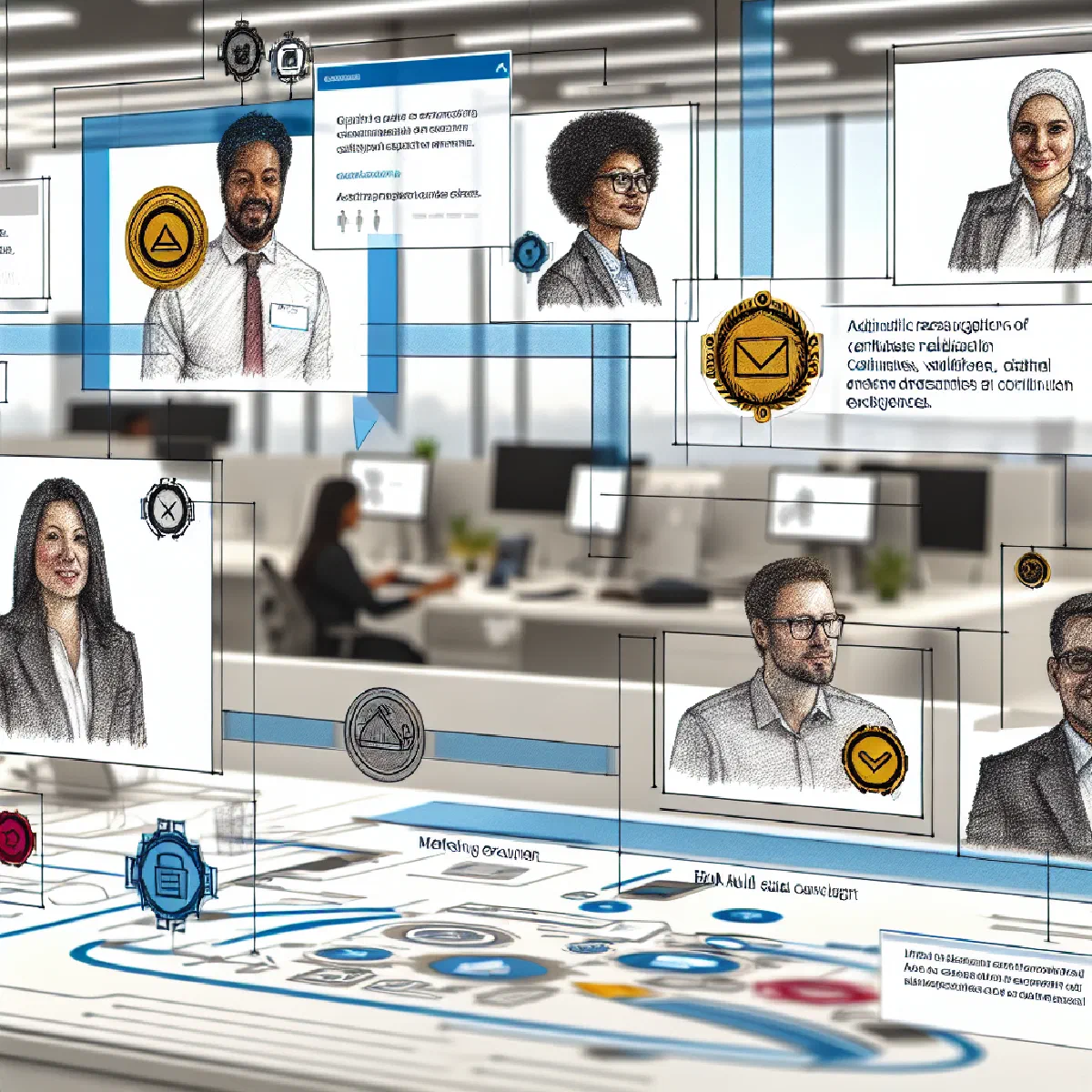
Explore how micro-credentials bridge skill gaps, enhance hiring, and offer affordable, flexible learning options for today's workforce demands.
“Micro-credentials immediately contribute to addressing skill gaps, help reskill and upskill, and are rather affordable and accessible.”
The Rise Of The Micro-Credentials Movement: Validating Skills Beyond Traditional Degrees
Summary
The article “The Rise Of The Micro-Credentials Movement: Validating Skills Beyond Traditional Degrees” by Aditya Malik explores how micro-credentials are emerging as a vital complement to traditional education in workforce development, emphasizing their role in addressing the growing skills gap. Malik argues that while traditional degrees require significant investment and act as employment gatekeepers, they often result in a skills mismatch with the evolving demands of the modern workplace. Micro-credentials, described as small, targeted courses like nanodegrees and industry-specific certifications, present a cost-effective and flexible alternative that allows individuals and organizations to quickly address skill gaps, reskill, and upskill. By citing the IDC Digital Skilling Survey, which indicates a preference for micro-credentials among 60% of organization leaders, the article underscores their importance in real-world scenarios. Furthermore, micro-credentials enhance agility in hiring, reduce talent gaps, and validate skills in real-time, attributes that are crucial for both employees and employers in creating a future-ready workforce. Challenges such as verifying the credibility of credentials are acknowledged, suggesting the need for employers to play an active role in driving upskilling motivation. The integration of AI and data analytics is highlighted as a means to enhance personalized learning and performance tracking, ultimately fostering better retention, engagement, and the in-house development of leadership skills. The article concludes by asserting that the strategic integration of micro-credentials into corporate strategy will lead to improved productivity and employee well-being, positioning them as an essential tool for contemporary workforce development.
Analysis
From my perspective, the article effectively highlights the benefits of micro-credentials, aligning with my belief in the necessity of future-proofing through technology and lifelong learning. The analogy comparing micro-credentials to supplements and traditional degrees to full meals aptly illustrates their complementary nature. However, the argument could be strengthened with more detailed examples of organizations successfully implementing micro-credentials. While the article references surveys underscoring the preference for these credentials, it lacks depth in exploring how micro-credentials specifically address skills mismatches in different industries.
The piece assumes that the availability of micro-credentials will intrinsically drive engagement and reskilling, yet it neglects to thoroughly address motivation barriers or how companies can overcome these challenges, aside from vague mentions of employer-driven motivation. Furthermore, while the article acknowledges the need for verification of micro-credentials, it glosses over how organizations can effectively assess their authenticity without additional burden. My focus on AI as an augmentative tool could deepen the argument, advocating for AI-driven platforms in evaluating and curating these credentials for organizations, thus ensuring quality and relevance. In sum, while the article supports the micro-credentials movement, a more robust discussion on integration strategies and potential technology collaborations would enhance its practical application and appeal.
Nobody takes you aside anymore
Print taught a generation when to stop. What we lose when the machines absorb the constraints that used to form us.
Your AI agents need a water cooler
Coordination is a property of the room, not the org chart. What that means when your coworkers are agents.
On the death of the author and the birth of the detector
Why worrying about AI authorship is lazier, and more prejudiced, than it looks.
The work of being available now
A book on AI, judgment, and staying human at work.
The practice of work in progress
Practical essays on how work actually gets done.
The Principle of Sufficient Alternatives
Rules for a healthy software niche/ecosystem
Article analysis: Not using AI is “disservice” to students
Integrate AI in education to enhance learning and prepare students for future jobs, ensuring they thrive in an AI-driven world.
Article analysis: Course overview - business opportunities and applications of generative AI
Discover how to leverage generative AI for business growth and explore its diverse applications in our comprehensive course overview.
Article analysis: The future of corporate learning and employee engagement: Why traditional training is dead
Explore how AI and immersive technologies are reshaping corporate learning, making traditional training methods obsolete and enhancing employee engagement.