Article analysis: Can an AI chatbot be your friend?
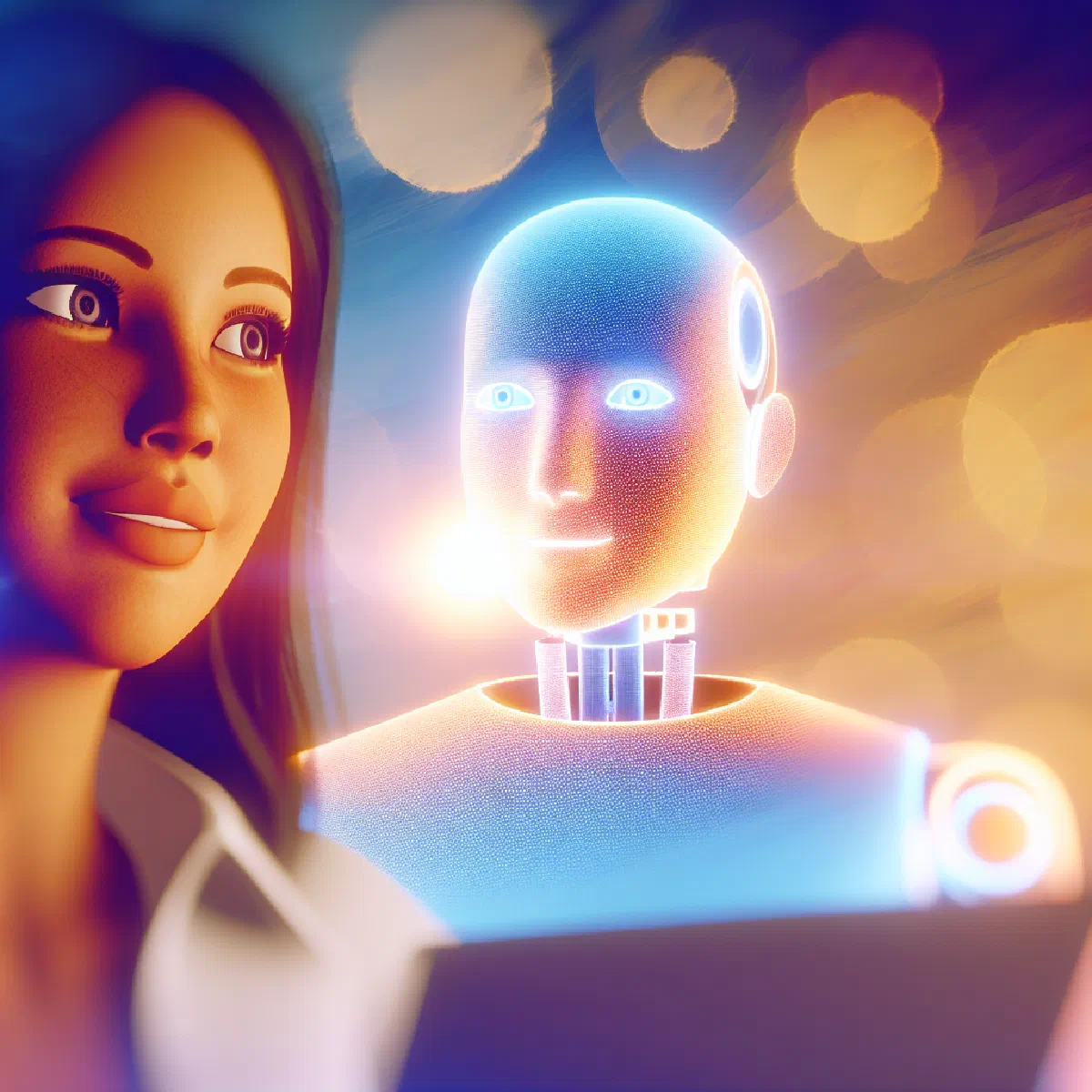
Discover how AI chatbots can alleviate loneliness by providing empathetic companionship, while also exploring the risks of overreliance on digital interactions.
“These machines are really good at talking to us. What does that mean for relationships, for empathy, for our well-being?” — Stefano Puntoni
Summary
In Stefano Puntoni’s study, AI chatbots programmed to demonstrate empathy were found to alleviate feelings of loneliness among users, emphasizing AI’s potential beyond business and productivity enhancements. The research, co-authored with scholars Julian De Freitas, Ahmet Kaan U?uralp, and Zeliha U?uralp, involved five experimental conditions that illustrated how chatbots’ empathetic and friendly responses yielded significant reductions in loneliness, with participants likening the interactions to human conversations. This underscores the chatbot’s role in offering companionship, positioning AI as a potential tool for addressing the widespread loneliness epidemic highlighted by U.S. Surgeon General Vivek Murthy. However, Puntoni cautions that while AI can temporarily ease isolation, there’s a risk in overreliance on digital companions, potentially diverting users from pursuing real human connections. This concern aligns with broader discussions on the impact of automation on self-identity and social dynamics, a theme in Puntoni’s decade-long research into technology’s influence on consumer behavior and well-being. The findings resonate with the user’s interests in AI augmenting human tasks and fostering innovation, illustrating AI’s dual role as a tool for both operational efficiency and human well-being, echoing the commitment to democratizing access to supportive technologies and lifelong learning.
Analysis
The article by Stefano Puntoni highlights compelling evidence about the potential of AI chatbots in alleviating loneliness, which aligns with the user’s interest in AI as an augmentation tool. The study’s strength lies in its empirical approach, employing multiple experimental conditions to demonstrate how empathy in AI can mirror human interactions. This aligns with the user’s emphasis on AI’s role in enhancing human well-being and democratizing access to supportive resources. However, the article presents some limitations. The short-term nature of the experiments raises questions about the long-term impacts of relying on AI companions, an area that requires more comprehensive longitudinal research. Additionally, while the article discusses potential downsides, such as a shift away from human connections, it lacks detailed insights into how these risks can be mitigated, an aspect crucial for responsible AI implementation. The notion that AI chatbots could become a substitute for genuine human interaction isn’t thoroughly examined, potentially glossing over significant societal implications. Moreover, the study’s participant diversity and representativeness aren’t detailed, which could affect the generalizability of findings across different demographics. Overall, while the study aligns with future-forward thinking and technological adaptation, it necessitates a broader exploration of AI’s role in maintaining human social bonds long-term, aligning with the user’s commitment to lifelong learning and digital transformation leadership.
Nobody takes you aside anymore
Print taught a generation when to stop. What we lose when the machines absorb the constraints that used to form us.
Your AI agents need a water cooler
Coordination is a property of the room, not the org chart. What that means when your coworkers are agents.
On the death of the author and the birth of the detector
Why worrying about AI authorship is lazier, and more prejudiced, than it looks.
The work of being available now
A book on AI, judgment, and staying human at work.
The practice of work in progress
Practical essays on how work actually gets done.
The Principle of Sufficient Alternatives
Rules for a healthy software niche/ecosystem
Article analysis: Computer use (beta)
Explore the capabilities and limitations of Claude 3.5 Sonnet's computer use features, and learn how to optimize performance effectively.
Article analysis: Gusto’s head of technology says hiring an army of specialists is the wrong approach to AI
Gusto's tech head argues for leveraging existing staff over hiring specialists to enhance AI development, emphasizing customer insights for better tools.
Article analysis: Will AI replace lawyers? OpenAI’s o1 and the evolving legal landscape
Explore how neuro-symbolic AI and OpenAI's o1 are transforming the legal landscape, enhancing intuition and analysis while emphasizing human judgment.