Paper & Honey
A warm theme for Thunderbird. Cream paper, brown ink, honey accents.
Thunderbird, but a small reward to open.
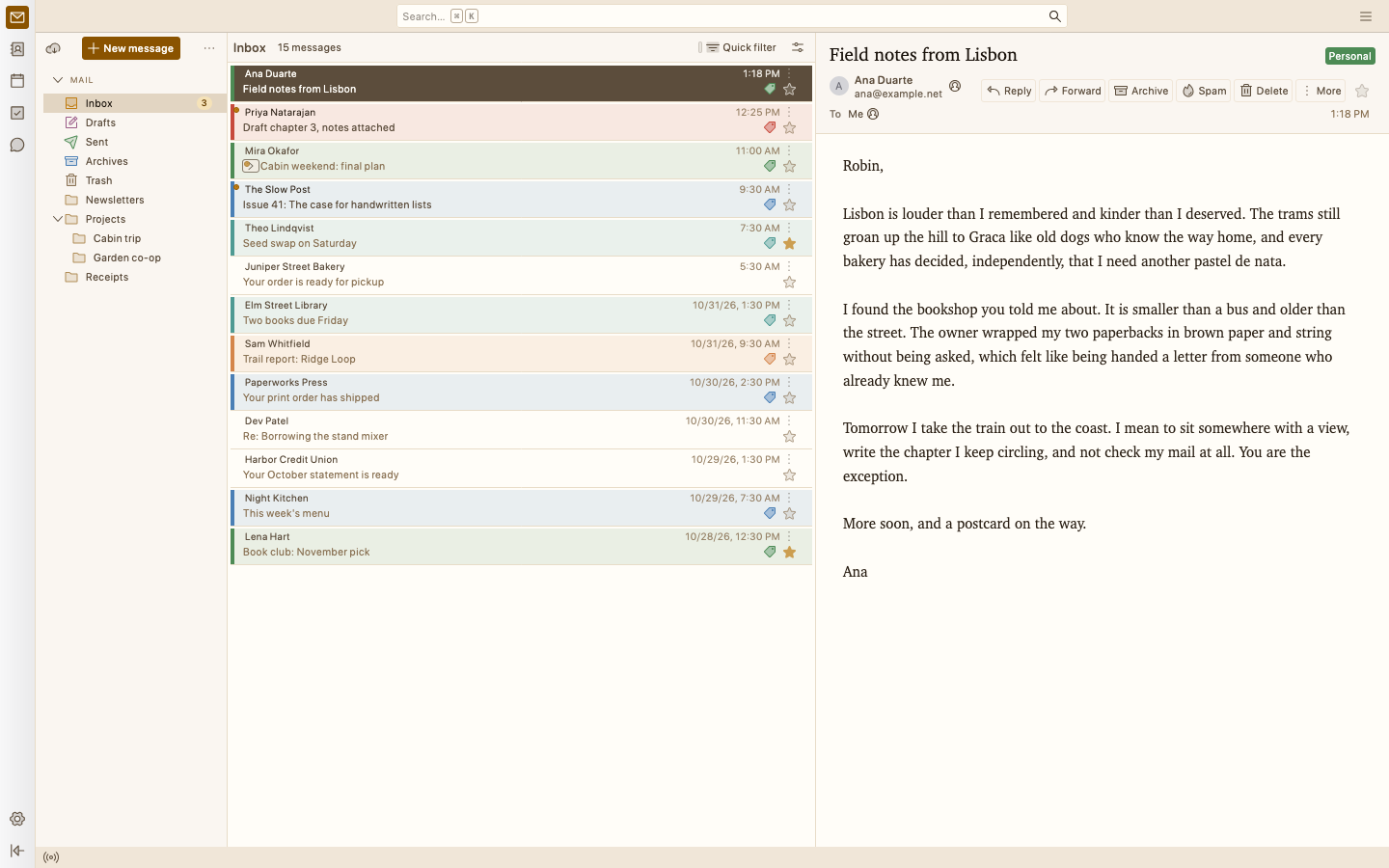
Thunderbird is the right mail client: open, local, yours. It is also so ugly, and most themes only recolour the toolbar. Paper & Honey themes the whole window.
What changes
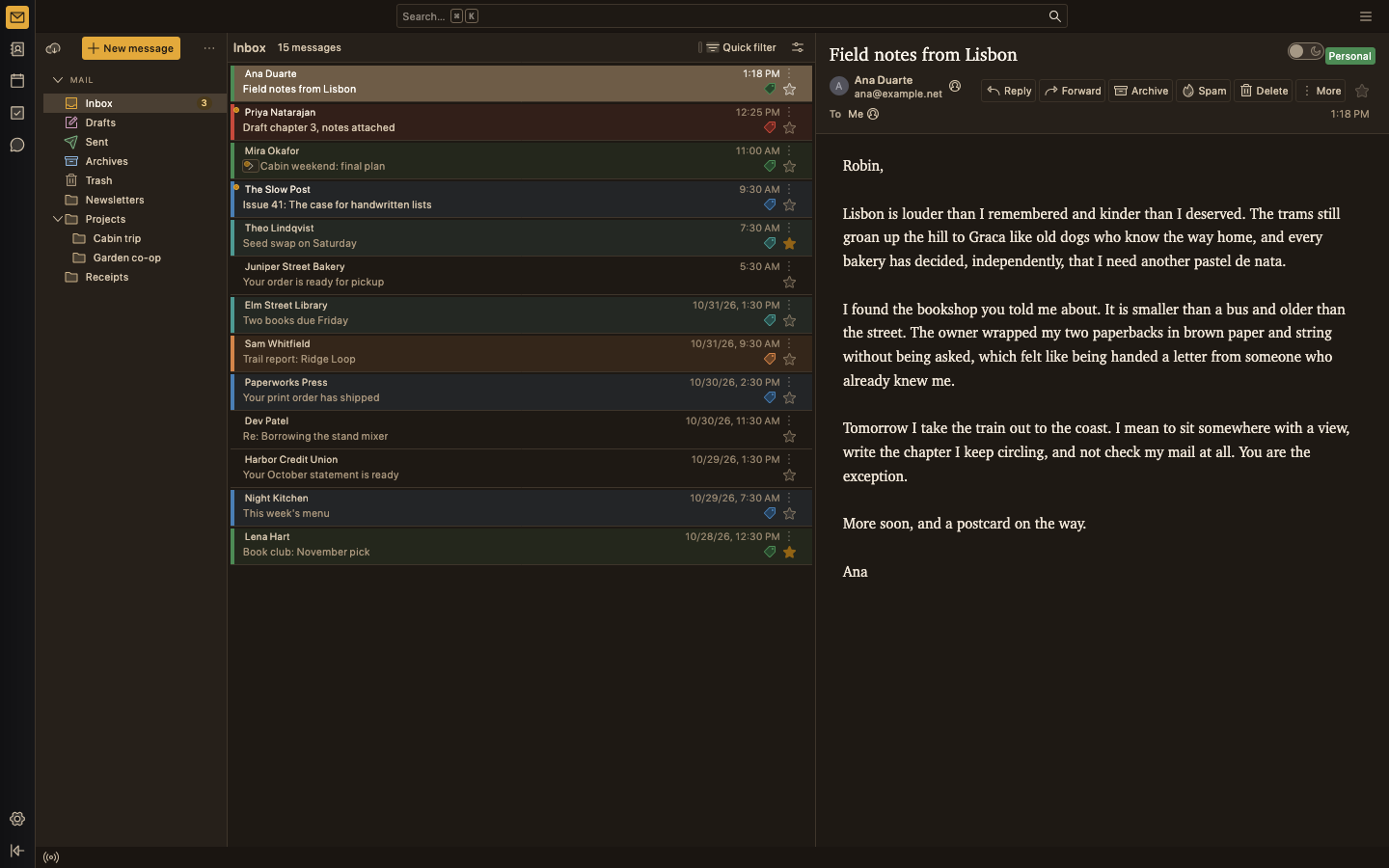
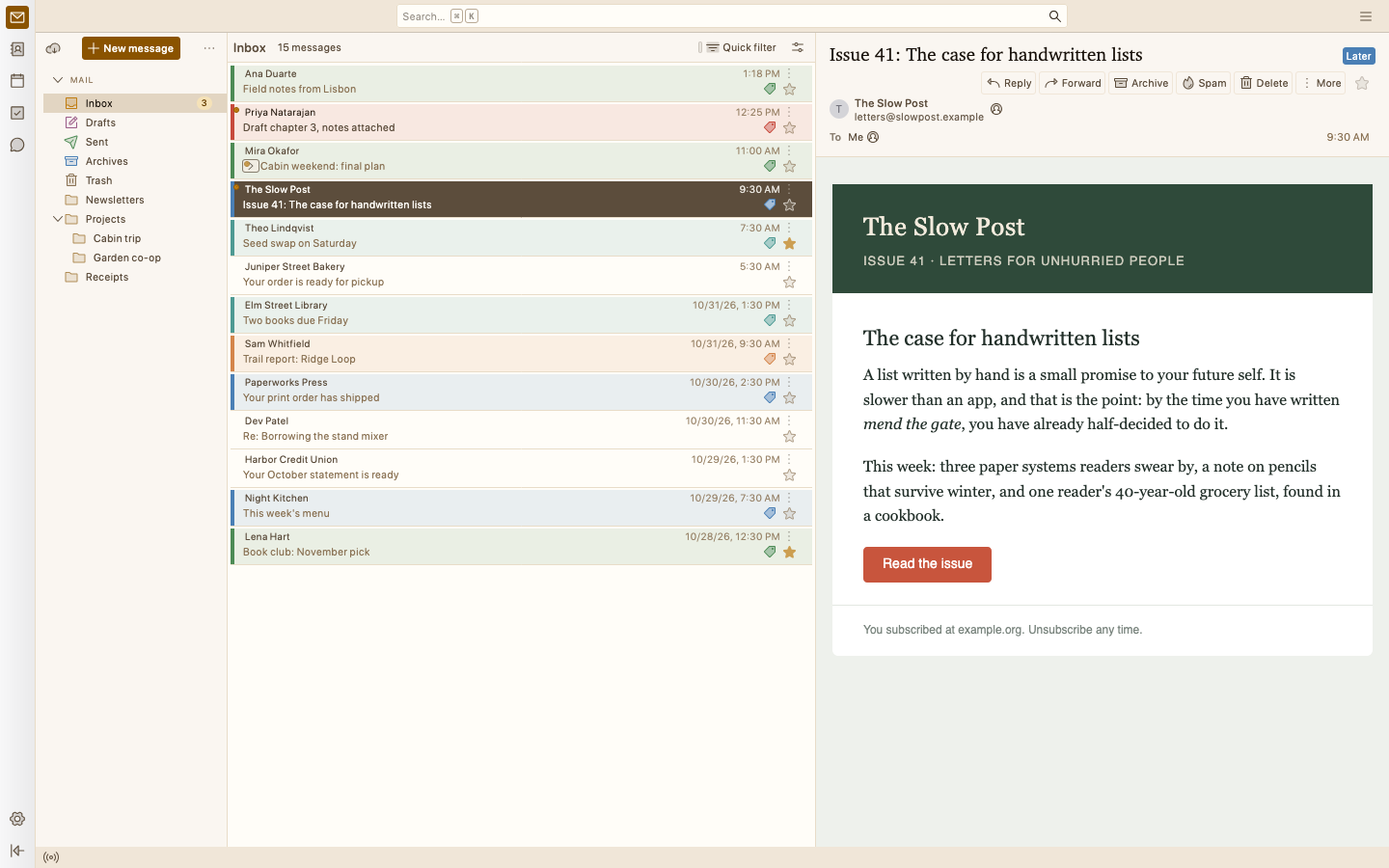
- Cream paper and brown ink in light mode. Espresso in dark.
- A calm two-line message list. Unread is darker ink, never bolder, so rows don’t jump as you read.
- A selection you can actually read, in every state.
- Rounded icons, with folders coloured by what they hold.
- Plain-text mail set in Charter with room to breathe. Newsletters keep their own design.
- The subject of each message as a headline.
- No bold, no stacked padding, sentence case wherever a theme can reach.
Install
Download both files:
- Paper & Honey 0.4.0, the theme
- Paper & Honey Reading 0.4.0, typography for message bodies and the compose window
In Thunderbird, open Add-ons and Themes, choose the gear menu, then Install Add-on From File, and pick each file. Updates arrive on their own after that.
Needs Thunderbird 151 or later. The type is tuned for the fonts that come with macOS; elsewhere it falls back gracefully. See the release page for notes.
Make the most of it
A few built-in Thunderbird settings finish the look:
- Two-line message cards, from the display options button above the message list.
- Compact density, under View.
- A compact message header: on any message, More, then Customize. Turn off the full address and the labels.
- Favorite folders above all folders, from the folder pane menu.
What it doesn’t do
Thunderbird never themes the summary you see when you select a whole thread, its own themes included, so that view stays plain. Settings pages aren’t themed yet. On a Mac, right-click menus are system menus and follow macOS.
Free to use, with credit
Paper & Honey is free under CC BY 4.0. Share it, change it, build on it. Credit “Paper & Honey” by Paul Welty, with a link back here. The source is on GitHub. Icons by Phosphor.
Nobody takes you aside anymore
Print taught a generation when to stop. What we lose when the machines absorb the constraints that used to form us.
Your AI agents need a water cooler
Coordination is a property of the room, not the org chart. What that means when your coworkers are agents.
On the death of the author and the birth of the detector
Why worrying about AI authorship is lazier, and more prejudiced, than it looks.
The work of being available now
A book on AI, judgment, and staying human at work.
The practice of work in progress
Practical essays on how work actually gets done.
The Principle of Sufficient Alternatives
Rules for a healthy software niche/ecosystem