Why your job matters more than mine: The selective morality of job loss
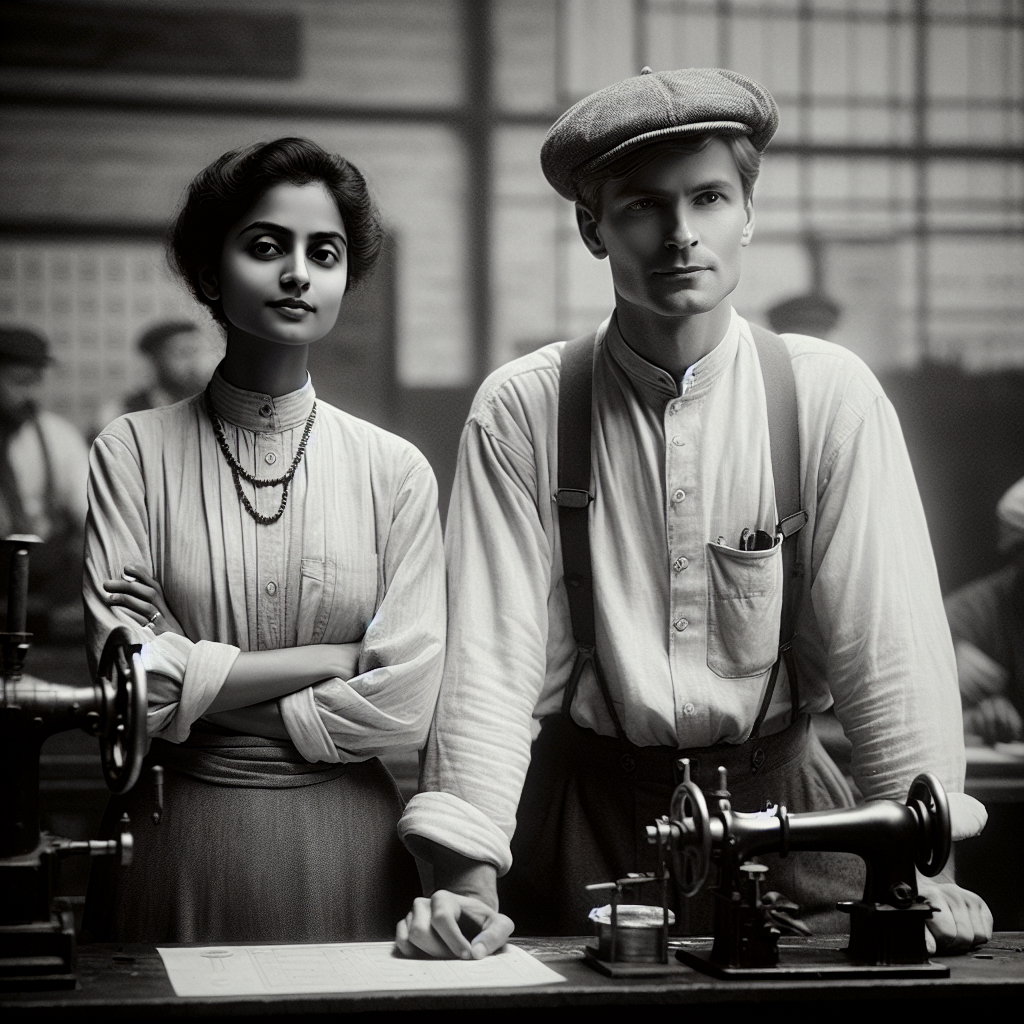
Throughout history, some jobs get moral protection while others are just casualties of progress. The pattern reveals that job protection isn't about the work itself—it's about class, power, and who gets to write the story.
In 2025, the U.S. federal government laid off approximately 270,000 workers.
At the Department of Education, 74 workers were let go. Sixty of them were Black.
The response? It was framed as “efficiency.” As cutting government “fat.” As finally holding bureaucrats accountable.
The same year, Merriam-Webster named “slop” its Word of the Year. Not just any slop—AI slop. The term emerged from writers’ concern that AI-generated content was flooding the internet with garbage, degrading authentic human expression.
Zero writers were actually laid off due to AI.
But “AI slop” became Word of the Year.
Let me show you the pattern.
The creative class mobilizes
The mobilization started in July 2023. Eight thousand authors—Margaret Atwood, John Grisham, George R.R. Martin—signed an open letter demanding AI companies stop “systematic theft” of their work. Two months later, the Authors Guild filed a class-action lawsuit against OpenAI. They called it “identity theft on a massive scale.”
May through September 2023, the Writers Guild of America struck for 148 days. It was framed as an existential crisis. The language was moral, not economic: AI doesn’t just threaten jobs, it threatens authenticity itself.
I get it. I understand the fear. What I don’t understand is the selectivity.
A tale of two elevators
Let me tell you about elevator operators.
In 1950, over 90,000 Americans operated elevators for a living. They wore uniforms. They greeted passengers. They controlled the machinery with skill and precision. It was a symbol of luxury, of service, of civilization itself.
Then automation came. Self-service elevators with push buttons.
By 1959, over 90% of new installations were automated. The profession disappeared completely. Out of 270 occupations listed in the 1950 Census, elevator operator is the only one fully eliminated by automation between 1950 and 2010.
Where was the moral panic? Where were the lawsuits claiming “identity theft”? Where was the 148-day strike?
There wasn’t one. Elevator operators just… disappeared. No organized resistance. No framing as theft of authentic work. Just quiet displacement.
Same with switchboard operators. In the 1950s, 342,000 women connected telephone calls manually, plugging and unplugging cords on massive switchboards. Another million worked as operators in offices, hotels, and factories.
Automation phased them out gradually from 1919 to 1978. By 2023, only 43,800 remained.
No moral outrage. No lawsuits. No strikes. Women just found other jobs—as typists, secretaries—or left the workforce entirely.
Why the difference?
The Luddites got it
There’s one historical example of organized worker resistance to automation: the Luddites.
From 1811 to 1816, skilled textile workers across Nottinghamshire, Yorkshire, and Lancashire broke into factories at night and smashed the machines replacing them. They destroyed over £10,000 worth of equipment in the first year alone. They wrote threatening letters signed “General Ludd” or “King Ludd.” They had community support—one official noted morosely, “Almost every creature of the lower order both in town & country are on their side.”
The British government responded with force. They deployed 14,000 troops—more than were fighting Napoleon on the Iberian Peninsula. They made machine-breaking a capital offense. They executed two dozen Luddites, including a 16-year-old boy who’d served as lookout. They deported dozens more to Australia.
The Luddites got violent government response because they were skilled craftsmen. They’d spent years in apprenticeships. Their work had historical prestige. They were embedded in their communities. As scholar Gavin Mueller notes, “They took pride in their work, and criticized the low quality of the goods produced with new technologies.”
Sound familiar?
But here’s what most people misunderstand about the Luddites: they weren’t opposed to technology. They were opposed to how it was being used. As Brian Merchant writes, “The Luddites were protesting the way that factory owners and early entrepreneurs were using technology to degrade their working conditions, erode their wages, and usher in a new kind of working—factory work—that would tear up their autonomy and leave them subservient to bosses.”
The Luddites got it. Technology isn’t the enemy. Power is.
Five million and counting
Between 2000 and 2018, the United States lost approximately five million manufacturing jobs.
Five. Million.
There was political rhetoric—Trump promised tariffs, Obama promised to “bring jobs back”—but there was no organized resistance comparable to the WGA strike. No 8,000 factory workers signing open letters. No framing manufacturing as the theft of authentic human expression.
Instead, it was explained as “market forces.” As “globalization.” As inevitable economic adjustment.
Auto workers in the early 1980s gave over $500 million in wage cuts and concessions. Twenty years later, companies employed 500,000 fewer workers. Real wages had grown only 1.3%. Plants closed in the unionized North and moved to the non-unionized South.
Steel workers negotiated wage reductions through the 1980s and 1990s. By the end of the decade, another 20% of firms had shut down. More mass layoffs. Many workers lost their pensions.
The response? “That’s just how markets work.”
Here’s the thing that drives me crazy about the selective outrage: researchers have shown that trade—not automation—was the primary driver of manufacturing job loss. From 1990 to 2007, only about a quarter of manufacturing job losses can be attributed to imports from China. The productivity paradox tells the story: productivity growth actually slowed during the period of mass job loss (from 4.4% in 1995-2000 to 2.2% in 2000-2018).
Workers weren’t replaced by robots. They were replaced by cheaper labor elsewhere. That’s not technological progress. That’s capitalism.
But we accepted it as natural. As inevitable. As market forces.
The counterexample
Let me give you a counterexample that scrambles the whole narrative: bank tellers.
When ATMs were introduced in the 1970s, everyone predicted massive job losses. The machines could handle the most common teller tasks—dispensing cash, taking deposits. President Obama said in 2011 that ATMs allowed businesses to “become much more efficient with a lot fewer workers.”
Here’s what actually happened:
In 1985, there were 60,000 ATMs and 485,000 bank tellers.
In 2002, there were 352,000 ATMs and 527,000 bank tellers.
Jobs increased.
Why? Because ATMs reduced the cost of operating a bank branch. The average urban branch needed 21 tellers before ATMs, only 13 after. But that made branches cheaper to operate, so banks opened more branches. More branches meant more tellers overall.
The job changed—from transaction processing to “relationship banking”—but it didn’t disappear.
(Now, in the 2020s, teller jobs are finally declining due to mobile banking. But that took 50 years.)
Where was the moral panic about ATMs threatening the “authentic work” of bank tellers? Nowhere. Because nobody framed counting money as authentic human expression.
Right now: two hundred seventy thousand
As I write this in late 2025, the federal government has laid off approximately 270,000 workers. The Department of Government Efficiency (DOGE) has announced plans for 300,000 total layoffs—nearly all attributed to Elon Musk’s “efficiency” initiative.
The Department of Education announced it will reduce half its workforce. The EPA, IRS, Veterans Affairs, Health and Human Services—massive cuts across agencies.
The response? Individual workers report panic attacks, depression, suicidal thoughts. But there’s no organized resistance. No moral framing. No lawsuits.
Instead, it’s framed as legitimate “efficiency.” Cutting “wasteful spending.” Trimming government “fat.”
These are people with expertise. With institutional knowledge. With technical skills. But they’re not “creatives.” So their displacement is just… economics.
The creative class gets special treatment
Here’s the pattern: Throughout history, some jobs get moral protection. Others are just casualties of progress.
What determines which is which?
In 2002, urban studies theorist Richard Florida published The Rise of the Creative Class, arguing that about 40 million workers—30% of the U.S. workforce—constitute a new “creative class” driving economic growth. This includes the “Super-Creative Core” (scientists, engineers, artists, designers, educators) and “Creative Professionals” (managers, lawyers, doctors, finance workers).
Basically, everyone with a college degree and a nice office.
Florida argued that cities should attract this creative class with cultural amenities, tolerance, and diversity. The theory became enormously influential. Cities across America—Pittsburgh, Memphis, Providence—started building bike paths and holding “celebrations of diversity” to attract creative workers.
But critics noticed something: Florida’s “creative class” was just a rebranding of yuppies. And the policies created profound inequality. As the Toronto activist group Creative Class Struggle put it: “‘Creative class’ policies are designed to build money-making cities rather than secure livelihoods for real people. These policies celebrate a society based on inequality, in which a select group of glorified professionals is supported by an invisible army of low-wage service workers.”
Here’s the uncomfortable truth: The creative class doesn’t get moral protection because their work is inherently more valuable. They get it because they control the discourse.
Writers write the articles. They frame the narrative. They decide what counts as “authentic expression” and what counts as “just labor.”
When writers face displacement, it’s theft of the human soul.
When elevator operators face displacement, it’s progress.
The danger of arbitrary protection
But here’s the problem with building job protection on “we’re special”: Specialness can be revoked.
The creative class convinced society that their work is fundamentally different—more authentic, more human, more valuable—than other labor. Not because it produces more economic value. Not because society couldn’t function without it. But because… they said so. Because they controlled the narrative.
That’s an extraordinarily fragile foundation.
The United States has always had a strong anti-intellectual streak. Academics are “ivory tower elites.” Journalists are “fake news.” Teachers are “indoctrinators.” Federal workers are “deep state bureaucrats.”
These aren’t new sentiments. They’re baked into American culture. And they can flip from cultural critique to political purge remarkably fast.
When 270,000 federal workers were laid off in 2025, they couldn’t argue their way back in. “But we process veterans’ benefits!” “But we enforce safety regulations!” “But we provide essential services!” Didn’t matter. They were no longer “special.” They were “bloat.”
The creative class should pay attention.
Because if your job protection is based on “my work is authentic expression and yours isn’t” rather than “all workers deserve dignity and protection,” you’re one cultural shift away from being on the outside.
You can’t argue your way back in. There was never a rational argument in the first place. Just vibes. Just cultural cachet. Just the temporary belief that your work matters more.
And vibes change.
Ask the tenured professors being dismissed for “woke ideology.” Ask the journalists laid off en masse as newspapers collapse. Ask the teachers facing book bans and curriculum restrictions.
Building a moat around your job based on “specialness” is strategically stupid. It’s also morally wrong—elevating your work above others’ creates the very framework that can be used against you when the cultural winds shift.
Solidarity protects everyone. “We’re special” protects no one for long.
What makes a job “special”?
I’ve been thinking about this pattern. What makes a job worthy of moral protection?
Five factors emerge:
Cultural Prestige: The work must be framed as “creative,” “skilled,” or “authentic.” Not routine. Not mechanical. Something special.
Discursive Power: The workers must be able to control the narrative. To write the articles, frame the debate, shape public opinion.
Class Position: Professional or middle class. Not working class. Not service workers.
Craft Tradition: Historical prestige matters. The Luddites were skilled artisans. Writers claim descent from a literary tradition. Elevator operators? Just a job.
Framed as “Human Essence”: The work must be positioned not just as labor, but as an expression of who we are. Writers claim their work is “authentic expression.” Coding is “just logic.” Manufacturing is “just assembly.”
Let me be clear: This is ideology, not reality.
The first article I wrote argued that writing is system-interface work, not authentic human expression. It’s a skill for navigating bureaucratic and commercial systems—just like coding. Just like lawyering. The “authentic expression” mythology is recent, dating to the emergence of “creative writing” as a discipline barely 100 years ago.
But that mythology serves a purpose: It protects creative class jobs by making them seem sacred.
Conclusion
The pattern is clear across history:
The Luddites were skilled artisans. The British government sent 14,000 troops to crush them.
Elevator operators quietly disappeared. Nobody noticed.
Writers face potential displacement. It becomes Word of the Year.
Five million manufacturing workers lose their jobs. We call it globalization.
270,000 federal workers—disproportionately women and people of color—get laid off. We call it efficiency.
It’s not about technology. It’s not about automation. It’s not even really about jobs.
It’s about class. It’s about power. It’s about who gets to write the story.
The creative class convinced us that writing is soul-work while coding is mechanics. That design is expression while manufacturing is assembly. That journalism is truth-seeking while government work is bureaucracy.
But strip away the rhetoric, and writing is just system-interface work. It’s a skill for navigating formal systems—like coding, like lawyering, like the work of a skilled factory operator.
None of it is more “essentially human” than the rest.
All of it has dignity. Some of it just has better PR.
So when the next round of layoffs comes—and they will come, because they always do—ask yourself: Whose jobs will matter? Whose displacement will be framed as theft of the human soul, and whose will be framed as inevitable economic adjustment?
And more importantly: Who decides?
Because right now, the people deciding are the people whose jobs are on the line.
Writers write about writers.
And everyone else just gets “market forces.”
Works cited
“2024 Artificial Intelligence TechReport.” American Bar Association.
“2025 United States federal mass layoffs.” Wikipedia.
“6 Jobs From the 1950s That Barely Exist Today.” History Facts.
“Against AI: An Open Letter From Writers to Publishers.” Literary Hub, July 18, 2025.
“AI | 2024 Stack Overflow Developer Survey.” Stack Overflow.
“Automation Isn’t the Biggest Threat to US Factory Jobs.” Airline Hydraulics Blog, April 17, 2024.
“Before AI skeptics, Luddites raged against the machine…literally.” National Geographic, August 4, 2025.
“Creative class.” Wikipedia.
“Deconstructing Richard Florida.” Createquity, April 2009.
“Do Not Blame Trade for the Decline in Manufacturing Jobs.” Center for Strategic and International Studies, August 5, 2025.
“For the Luddites, the Machines Weren’t the Problem.” Progressive.org, September 7, 2023.
“How ‘slop’ became the defining word of 2025.” Fast Company, December 2025.
“Is Automation Really to Blame for Lost Manufacturing Jobs?” Foreign Affairs, June 24, 2025.
“Labour market deregulation and the decline of labour power in North America and Western Europe.” Policy and Society, September 1, 2008.
“Merriam-Webster’s word of the year for 2025 is AI ‘slop’.” PBS News.
“Not all robots take your job, some become your co-worker.” Brookings, March 9, 2022.
“Over the last 60 years, automation has totally eliminated just one US occupation.” Quartz, July 20, 2022.
“Reporters’ Memo: Data Show Trade Had Greater Impact Than Automation on Manufacturing Job Loss.” Public Citizen, March 24, 2020.
“RIF watch: See which agencies are laying off federal workers.” Government Executive, February 27, 2025.
“Telephone Operators: The Elimination of a Job.” Conversable Economist, August 17, 2024.
“The Changing Role of Manufacturing in the U.S. and Insights for the Rural West.” Headwaters Economics, August 25, 2025.
“The Authors Guild, John Grisham, Jodi Picoult, David Baldacci, George R.R. Martin, and 13 Other Authors File Class-Action Suit Against OpenAI.” The Authors Guild, September 20, 2023.
“The Creative Class Joins the Working-Class.” Working-Class Perspectives, October 17, 2011.
“The Curse of the Creative Class.” City Journal, March 23, 2023.
“The Job Automation Eliminated.” Automation World.
“The Original Luddites Raged Against the Machine of the Industrial Revolution.” History.com, January 31, 2025.
“Toil and Technology.” Finance & Development, International Monetary Fund, March 2015.
“Understanding the Decline of U.S. Manufacturing Employment.” W.E. Upjohn Institute for Employment Research.
“What ATMs and Bank Tellers Tell Us About Automation.” American Enterprise Institute, May 25, 2022.
“What is the creative class?” Briarpatch Magazine.
“What the Luddites Really Fought Against.” Smithsonian Magazine, November 1, 2023.
“Why You Should Be a Luddite.” Current Affairs, May 29, 2024.
Bessen, James. Learning by Doing: The Real Connection between Innovation, Wages, and Wealth. Yale University Press, 2015.
Florida, Richard. The Rise of the Creative Class: And How It’s Transforming Work, Leisure, Community and Everyday Life. Basic Books, 2002.
Merchant, Brian. Blood in the Machine: The Origins of the Rebellion Against Big Tech. Little, Brown and Company, 2023.
Why customer tools are organized wrong
This article reveals a fundamental flaw in how customer support tools are designed—organizing by interaction type instead of by customer—and explains why this fragmentation wastes time and obscures the full picture you need to help users effectively.
Infrastructure shapes thought
The tools you build determine what kinds of thinking become possible. On infrastructure, friction, and building deliberately for thought rather than just throughput.
Server-side dashboard architecture: Why moving data fetching off the browser changes everything
How choosing server-side rendering solved security, CORS, and credential management problems I didn't know I had.
The work of being available now
A book on AI, judgment, and staying human at work.
The practice of work in progress
Practical essays on how work actually gets done.
Dev reflection - February 20, 2026
I want to talk about the difference between execution and verification. Because something happened this week that made the distinction painfully clear, and I think it matters far beyond software.
Dev reflection - February 18, 2026
There's a moment in any system—a team, a company, a workflow—where the thing you've been optimizing for stops being the constraint. And you don't notice right away. You keep pushing on the old bott...
Dev reflection - February 17, 2026
I want to talk about staging areas. Not the technical kind—the human kind. The places where work goes to sit. The inbox you check before forwarding. The draft folder. The approval queue. The meetin...
When teaching stops being bounded
AI removes the constraints that gave teaching its shape—one teacher, thirty students, limited time. But lifting constraints doesn't make the work easier. It makes it different. Teachers trained for a bounded classroom now face an unbounded role that requires judgment, discernment, and presence in ways we haven't yet mapped.
AI in writing: The end of a professional monopoly
This article reframes the AI writing debate: the panic isn't about creativity—it's about a professional class losing control of the systems they've gatekept for a century.
Connecting AI to personal knowledge: Building the trilium MCP server
Transform your personal knowledge management with AI integration. Discover how to connect Trilium Notes to Claude Desktop for seamless information access.