The future of hiring: Why AI skills are outpacing industry experience
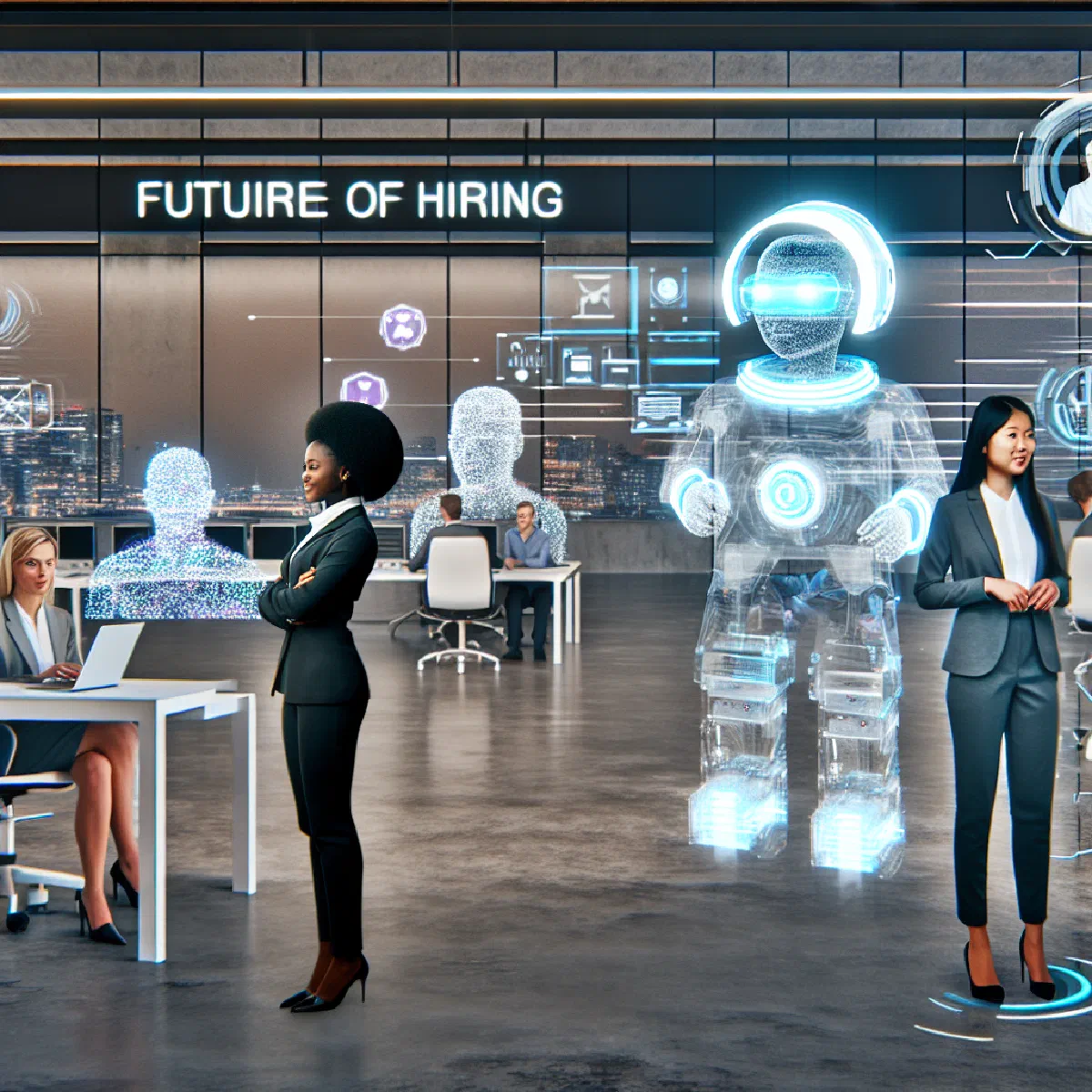
Discover how AI skills are reshaping hiring trends, with 71% of leaders favoring them over industry experience for better business outcomes.
“AI is democratizing expertise across the workforce. Our latest research highlights the opportunity for every organization to apply this technology to drive better decision-making, collaboration — and ultimately business outcomes.">
71% of leaders prefer hiring candidates with AI skills over those with the relevant industry experience
AI skills dominate the job market: a new paradigm
The 2024 Annual Work Trend Index by Microsoft and LinkedIn reveals a significant shift in employer preferences. A striking 71% of executives now prioritize candidates with artificial intelligence (AI) expertise over traditional industry experience. This pivot offers early-career professionals a promising foothold while challenging seasoned experts to adapt swiftly.
Employer-employee training gap
Despite the pronounced preference for AI skills, a critical gap exists between employer expectations and employee training. Only 25% of companies plan to provide generative AI training, highlighting a disconnect as 75% of workers independently adopt AI tools. Leaders acknowledge AI’s potential for maintaining competitiveness, yet they struggle with measuring productivity gains and defining clear implementation strategies.
Workforce anxiety and job security
The rising integration of AI stirs concerns about job security. The report indicates that 45% of professionals fear AI could replace their roles. Instances like Klarna’s AI assistant performing tasks of 700 employees and Amazon AWS hinting at a reduced need for coding roles underscore these anxieties. However, these technological shifts also pave the way for evolving skill sets, ultimately benefiting organizational innovation.
Upskilling: the key to future-proof careers
To navigate this evolving landscape, professionals must proactively upskill in AI. Platforms such as Datacamp, Udemy, and Coursera offer accessible pathways for AI education. By taking control of their learning journeys, individuals can bridge the gap between current capabilities and future requirements, securing their relevance in an AI-dominated job market.
Conclusion
As AI continues to reshape the employment landscape, the emphasis on upskilling becomes imperative. By embracing AI tools and taking charge of personal development, professionals can stay ahead, ensuring sustained competitiveness and career longevity. The future favors those who adapt, innovate, and strategically position themselves in this dynamic job market.
Nobody takes you aside anymore
Print taught a generation when to stop. What we lose when the machines absorb the constraints that used to form us.
Your AI agents need a water cooler
Coordination is a property of the room, not the org chart. What that means when your coworkers are agents.
On the death of the author and the birth of the detector
Why worrying about AI authorship is lazier, and more prejudiced, than it looks.
The work of being available now
A book on AI, judgment, and staying human at work.
The practice of work in progress
Practical essays on how work actually gets done.
The Principle of Sufficient Alternatives
Rules for a healthy software niche/ecosystem
Bookmark: AI is going to eliminate way more jobs than anyone realizes
AI is set to disrupt millions of jobs, demanding urgent workforce reskilling while creating new opportunities in the evolving job market.
Article analysis: The future of work: Exploring the leap from SaaS to outcome-as-a-service (oaas) with AI
Explore how AI is transforming work by shifting from SaaS to Outcome-as-a-Service, enabling autonomous task execution and redefining productivity.
Article analysis: “Salesforce’’s Agentforce: Transforming enterprise operations with advanced AI integration”
Discover how Salesforce's Agentforce leverages advanced AI to transform enterprise operations, enhancing efficiency and customer satisfaction across industries.