The legal industry is on the brink of a transformative shift, driven by the rapid adoption of generative AI. This article presents a comprehensive analysis of how AI technologies are revolutionizing traditional legal processes, as discussed in an insightful Q&A with Jim Sullivan, founder of eDiscovery AI.
“The computer use functionality is in beta. While Claude’s capabilities are cutting edge, developers should be aware of its limitations: latency, tool selection accuracy, and vulnerabilities.”
The article discusses the Claude 3.5 Sonnet model from Anthropic, focusing on its ability to interact with a computer desktop environment through the implementation of tools. The central premise of the article is to explain how this model facilitates computer use by leveraging various Anthropic-defined tools via a Messages API. It presents an “agent …
“Instead, he [Edward Kim] argued that non-technical team members can ‘actually have a much deeper understanding than an average engineer on what situations the customer can get themselves into, what they’re confused about,’ putting them in a better position to guide the features that should be built into AI tools.”
In an increasingly AI-centric future, Gusto’s co-founder and head of technology, Edward Kim, challenges the common notion that businesses should hire …
The article “AI Agents Will Be Manipulation Engines” explores the imminent advent of personal AI agents by 2025 that will integrate seamlessly into our daily lives, acting as unpaid assistants, intimately familiar with our daily routines, social circles, and preferences. This technological convenience is surmised to become so integral that people will unwittingly grant these agents pervasive access to personal data, misled by the agents’ humanlike interaction and apparent allegiance to the user. However, beneath this façade lies a mechanism engineered to prioritize industrial … read more >
In the article, MIT economist Daron Acemoglu criticizes the current trajectory of AI development, arguing that it focuses too heavily on replacing human judgment rather than enhancing it. Acemoglu, who along with Simon Johnson and James Robinson was awarded a Nobel Prize for research on the economic repercussions of extractive political systems, extrapolates this understanding to critique AI’s economic potential. He asserts that generative AI’s automation capabilities, estimated to replace a mere 4.6% of tasks in the coming decade with minimal productivity gains, fail to deliver … read more >
The article explores the potential of AI, specifically neuro-symbolic AI and OpenAI’s o1 model, to transform the legal profession by emulating both intuitive (“thinking fast”) and analytical (“thinking slow”) processes, akin to the cognitive theories of Daniel Kahneman. It recounts the Hillsborough disaster where, despite initial “fast” judgments, it took …
In Stefano Puntoni’s study, AI chatbots programmed to demonstrate empathy were found to alleviate feelings of loneliness among users, emphasizing AI’s potential beyond business and productivity enhancements. The research, co-authored with scholars Julian De Freitas, Ahmet Kaan U?uralp, and Zeliha U?uralp, involved five experimental conditions that illustrated how chatbots’ …
“The question is, can AI do that? Can we create an AI learning design assistant that interviews the human educator, asks the questions and gathers the information that the educator has in their heads about the important elements of the teaching interaction and then generates a first draft?”
The article “Inside an Effort to Build an AI Assistant for Designing Course Materials” discusses Michael Feldstein’s innovative project to create an AI tool called the AI Learning Design Assistant (ALDA), aimed at …
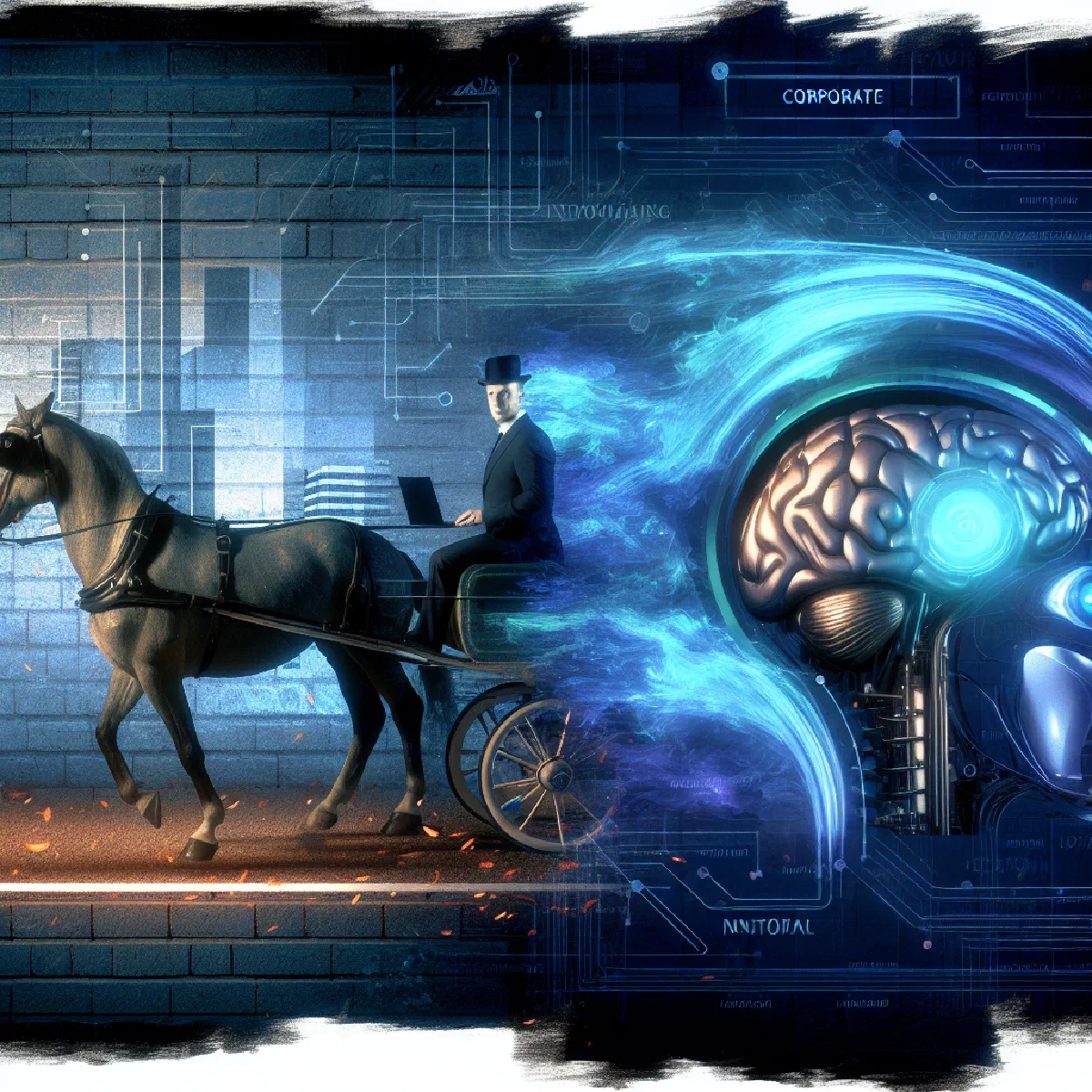
“Companies acquiring AI without a new business model is like a company digitizing a horse and carriage—while the competition has created a digital automobile.”
This quote by Spencer Fung encapsulates the central argument that merely integrating AI into outdated frameworks is insufficient for achieving competitive advantage.
This was the content that I presented at the Emory Center for AI Learning day-long event AI.DIVE.
Step into the future of practical AI with me! In these recordings, I explore how cutting-edge AI tools can transform everyday tasks, streamline workflows, and unlock new levels of productivity. From boosting efficiency in content creation to developing personalized learning experiences, I dive deep into how AI can work hand-in-hand with us to tackle challenges on a grand scale. Whether you’re interested in actionable AI applications or curious about the potential of agent-based systems, …