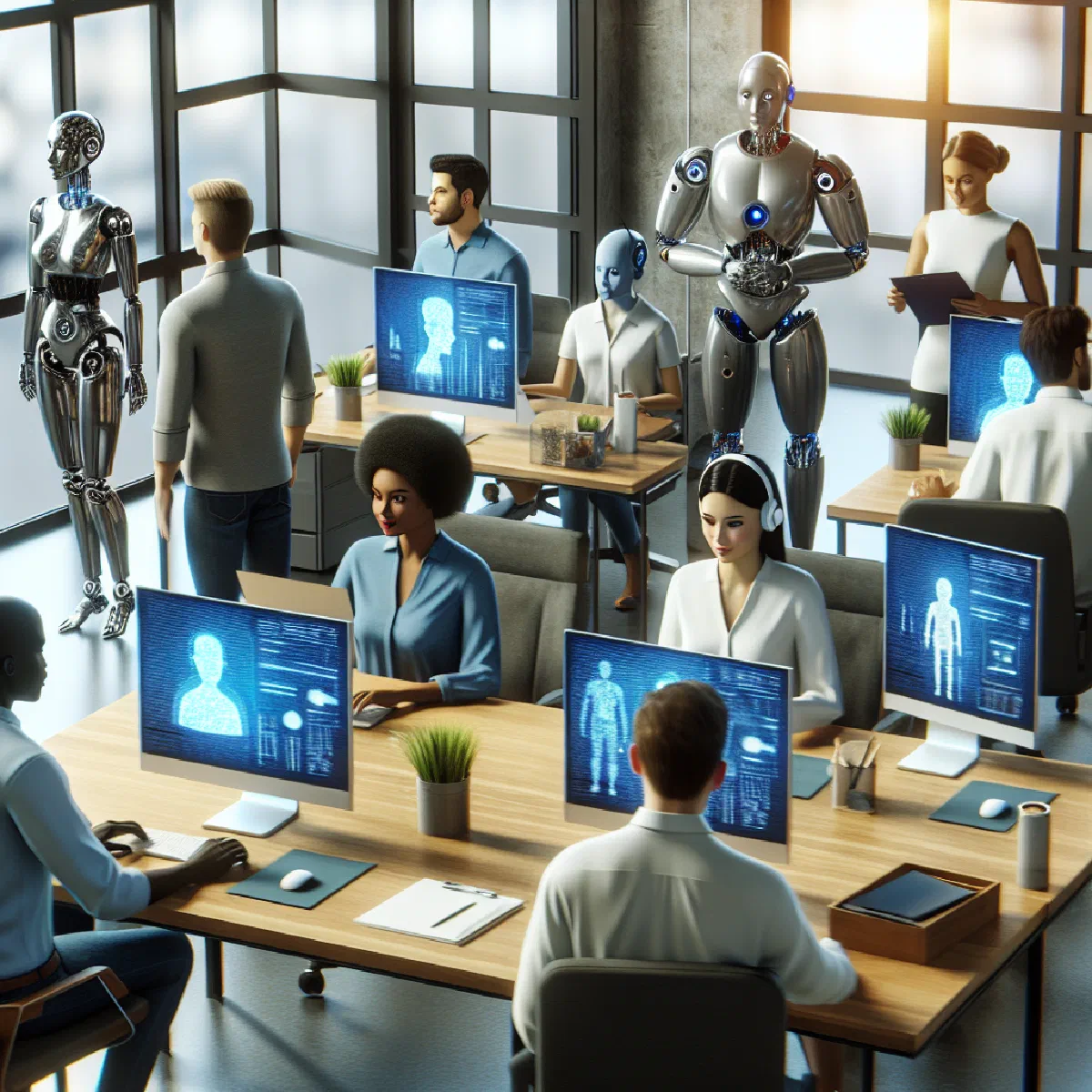
Salesforce CEO Marc Benioff, at the World Economic Forum in Davos, emphasized a pivotal shift in workforce dynamics, where CEOs will lead teams comprising both humans and AI agents. Benioff highlighted that these ‘digital workers’, or AI agents, are designed to undertake complex and time-intensive tasks, thereby enabling human employees to focus on more …
In the article “The Future of Work Isn’t in Tech Skills, Says Recruiter,” Terry Petzold, with over 25 years in recruitment, advocates for a focus on soft skills rather than purely technical skills for future employability. Reflecting on recent trends, such as the rapid evolution of AI technologies like ChatGPT, he notes the diminished future role of coding as once predicted. Despite the ongoing relevance of digital proficiency across fields—from marketing to operations—the real future lies in emotional intelligence (EQ) and soft skills, which facilitate relationship-building … read more >
The World Economic Forum’s bi-annual survey reveals significant expectations for AI’s impact on employment, with a dual focus on job displacement and skill augmentation. By 2030, 41% of employers predict AI will reduce their staffing levels due to automation, although a majority, 77%, plan to train staff in AI competencies, indicating AI’s dual impact on job transformation and human workforce collaboration. Covering 1,000 employers and 14 million workers across 22 industries, the report underscores a skills gap with AI, big data, networks, and cybersecurity as burgeoning … read more >
The World Economic Forum’s Future of Jobs Report underscores a transformative shift in global employment dynamics by 2030, predicated on the expansive rise of artificial intelligence and technology. As demographic shifts, technological advancements, and economic uncertainties converge, a projected net creation of 78 million jobs stands juxtaposed with the displacement of 92 million roles. The decline of traditional clerical roles, including cashiers, bank tellers, and administrative assistants, contrasts sharply with the burgeoning demand for technology-centric positions. Roles related … read more >
The article discusses WPP’s newly issued mandate requiring its 114,000 employees to return to the office four days a week. This sweeping return-to-office (RTO) policy marks a significant shift in the company’s approach to workplace flexibility following the widespread adoption of remote work practices during the COVID-19 pandemic. WPP’s CEO, Mark Read, emphasized that the initiative aims to foster creativity, collaboration, and company culture, which he believes are better facilitated through in-person interactions. While the mandate reflects a growing trend among large … read more >
The article offers an insightful perspective with the statement: “The post-COVID workplace debate is often framed as a fight over how many days employees should be in the office, but it’s really about something much bigger: a new social contract—the future of less work—where the emphasis is on finding a more sustainable and meaningful way to balance professional and personal fulfillment.” This quote encapsulates the central thesis and evolving nature of workplace dynamics.
The article “Ceding Control To The Agent” explores the complex interplay between automation and human labor, particularly in light of the rapid advancements in AI. The central thesis posits that while AI offers the potential to liberate humans from mundane tasks, it also poses significant challenges to employment. The narrative illustrates this tension by highlighting how previous industrial revolutions predominantly transformed manual labor, while today’s AI revolution targets cognitive tasks previously considered uniquely human. This shift demands a rethinking of human work … read more >
Exploring future business trends, this article sheds light on how AI is reshaping operations beyond customer service and emphasizes the rise of self-aware consumers demanding seamless experiences. The role of entrepreneurship in driving innovation and sustainability’s growing importance are highlighted as key components for business success in 2025.
“To stay ahead, businesses must continually exceed expectations and anticipate consumer needs to build lasting loyalty.”
Explore the revolutionary shift in organizational design as AI transforms from a mere productivity tool to a core strategy. This exciting insight from Wired reveals how companies will soon thrive by integrating human and AI collaboration. By 2025, we might witness “AI-native” startups leading the charge with innovative, lean team structures that challenge traditional business hierarchies. Join me in considering the future of work shaped by this remarkable synergy between humans and AI. read more >
In Forbes’ recent piece “Too Busy For The Future: Why Managers Can’t Close The Skills Gap,” we discover the fundamental shift needed in how we evaluate managerial success. Instead of focusing solely on immediate results, Doug Dennerline and the Betterworks report highlight the importance of aligning performance metrics with long-term skill development. This insightful article proposes the innovative idea of implementing dedicated ‘development managers’ to prioritize employee growth, ensuring a workforce ready for future challenges. It’s a must-read for … read more >