Start with purpose
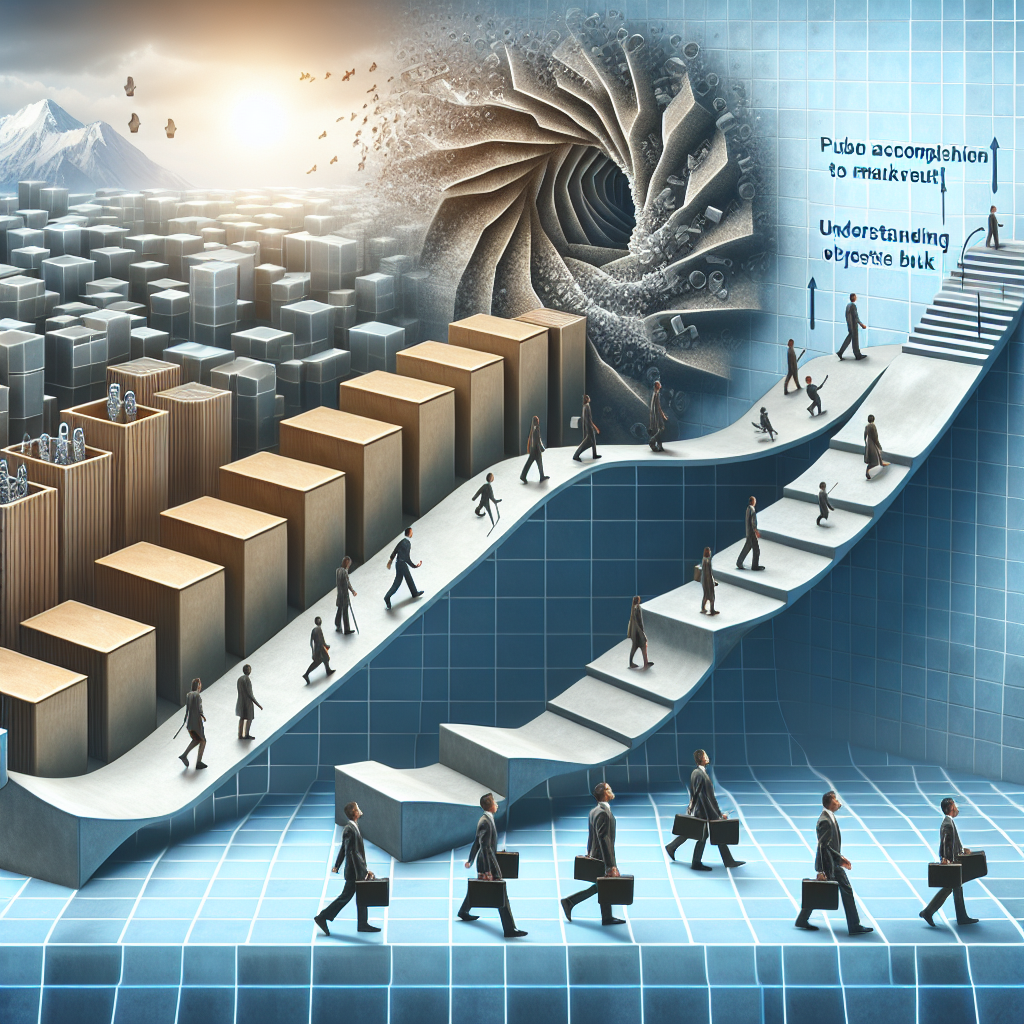
Transform your work by prioritizing purpose over tasks. Discover how focusing on time and intention leads to greater impact and fulfillment.
From Scope to Time, Content to Purpose: A Transformative Journey
In the early stages of my career, my approach to work was straightforward: scope ruled supreme. The task was the task, and its completion—no matter how long it took—was the goal. I assumed that work itself inherently carried value, and as long as I could deliver the entire scope, success was guaranteed. There was little consideration for the time spent. My focus was entirely on the content—on completing what was assigned or imagined—without questioning why we were doing it in the first place. It was a natural way of thinking: work was associated with output, and output was inherently worthwhile. Or so I thought.
The first crack in this belief came when I realized that time is not just a constraint—it is a value in itself. Partial progress made early often outweighs full completion delivered late. This insight shifted my thinking profoundly. I began to see time as a focusing mechanism, forcing decisions about what truly matters. What can we achieve in the time we have? This question naturally leads to prioritization, with the most critical tasks rising to the top. Time became a filter, revealing what was important and what was not. The more I embraced this perspective, the more my work became efficient, impactful, and aligned with real needs.
This shift from scope to time laid the foundation for a deeper transformation—from content to purpose. Initially, my work was driven by the “what”: producing outputs, checking off deliverables, and ensuring tasks were done. But eventually, I began asking “why”: Why are we doing this? What is the ultimate goal? This change wasn’t merely a step; it was a leap. Purpose-driven work demands clarity and intentionality. It requires you to look beyond what can fit into the available time and ask whether those tasks should even be done at all.
The danger of remaining content-driven is that it can reduce work to a mechanical process: filling time with tasks simply because they’re doable. But purpose asks a different set of questions. What is critical to the project or the goal? What aligns with the broader vision? This mindset is essential not just for staying efficient but for maintaining the integrity of the work itself. It mirrors the perspective of a product manager who safeguards the holistic concept of a project, ensuring it stays true to its intended purpose rather than becoming a fragmented assembly line of features.
In practice, this purpose-oriented approach has reshaped how I tackle long-term goals. While frameworks like the Minimum Viable Product (MVP) can provide a helpful lens, they often come with misconceptions. Many interpret MVP as a scramble to throw together a basic version of a product and refine it later. But I see purpose-driven work as something deeper. It’s about deciding what is truly needed, delivering the best version of that within the time available, and ensuring it stays true to the larger vision. Purpose isn’t minimal—it’s essential. It strips away what’s unnecessary and leaves behind only what genuinely advances the mission.
This transformation—from scope to time, content to purpose—has also given me a fresh perspective on life. There is a temptation, especially in a culture that values experimentation and iteration, to try a bit of everything and see what sticks. In work, this might mean throwing features at a product; in life, it might mean collecting experiences to find fulfillment. While experimentation has its place, I’ve found it equally important to pause for reflection. Visioning, as I think of it, is about defining your purpose with clarity. What are you really trying to achieve? Is this problem worth solving? Why does it matter? Without this intentionality, you risk expending energy on tasks and pursuits that are ultimately directionless.
This chapter, then, is about learning to ask the right questions: What is the best use of the time we have? What purpose does this work serve? And how can we ensure that what we do aligns with the vision we wish to fulfill? These lessons have not only made my work more effective but have also brought a deeper sense of meaning and satisfaction to everything I do. They are lessons I hope others can take and adapt to their own lives and work, finding clarity in purpose and value in time.
Why customer tools are organized wrong
This article reveals a fundamental flaw in how customer support tools are designed—organizing by interaction type instead of by customer—and explains why this fragmentation wastes time and obscures the full picture you need to help users effectively.
Infrastructure shapes thought
The tools you build determine what kinds of thinking become possible. On infrastructure, friction, and building deliberately for thought rather than just throughput.
Server-side dashboard architecture: Why moving data fetching off the browser changes everything
How choosing server-side rendering solved security, CORS, and credential management problems I didn't know I had.
The work of being available now
A book on AI, judgment, and staying human at work.
The practice of work in progress
Practical essays on how work actually gets done.
Junior engineers didn't become profitable overnight. The work did.
We've been celebrating that AI made junior engineers profitable. That's not what happened. AI made it economically viable to give them access to work that actually builds judgment, work we always knew
Three projects, three opposite methods, all monster output days: what that taught me about when process helps and when it's just comfort
I've been running a portfolio of software projects using a mix of autonomous AI pipelines and human-led parallel agent sessions. Yesterday, three different projects had monster output days — and th...
What happens when the pipeline doesn't need you
So here's something I noticed today that I want to sit with. I run several projects that use autonomous pipelines — AI systems that pick up tasks, write code, open pull requests, ship changes. One ...
"I don't know" is never an excuse: Make an assumption and document it
Transform uncertainty into action by making reasonable assumptions and documenting them. Embrace decision-making for progress without perfect information.
Try to make yourself obsolete
Embrace the power of making yourself obsolete by streamlining tasks, fostering innovation, and focusing on high-value contributions to drive personal and...
When teaching stops being bounded
AI removes the constraints that gave teaching its shape—one teacher, thirty students, limited time. But lifting constraints doesn't make the work easier. It makes it different. Teachers trained for a bounded classroom now face an unbounded role that requires judgment, discernment, and presence in ways we haven't yet mapped.