Let’s embark on a journey to explore not just the current applications, but the future implications of AI in reshaping talent management.
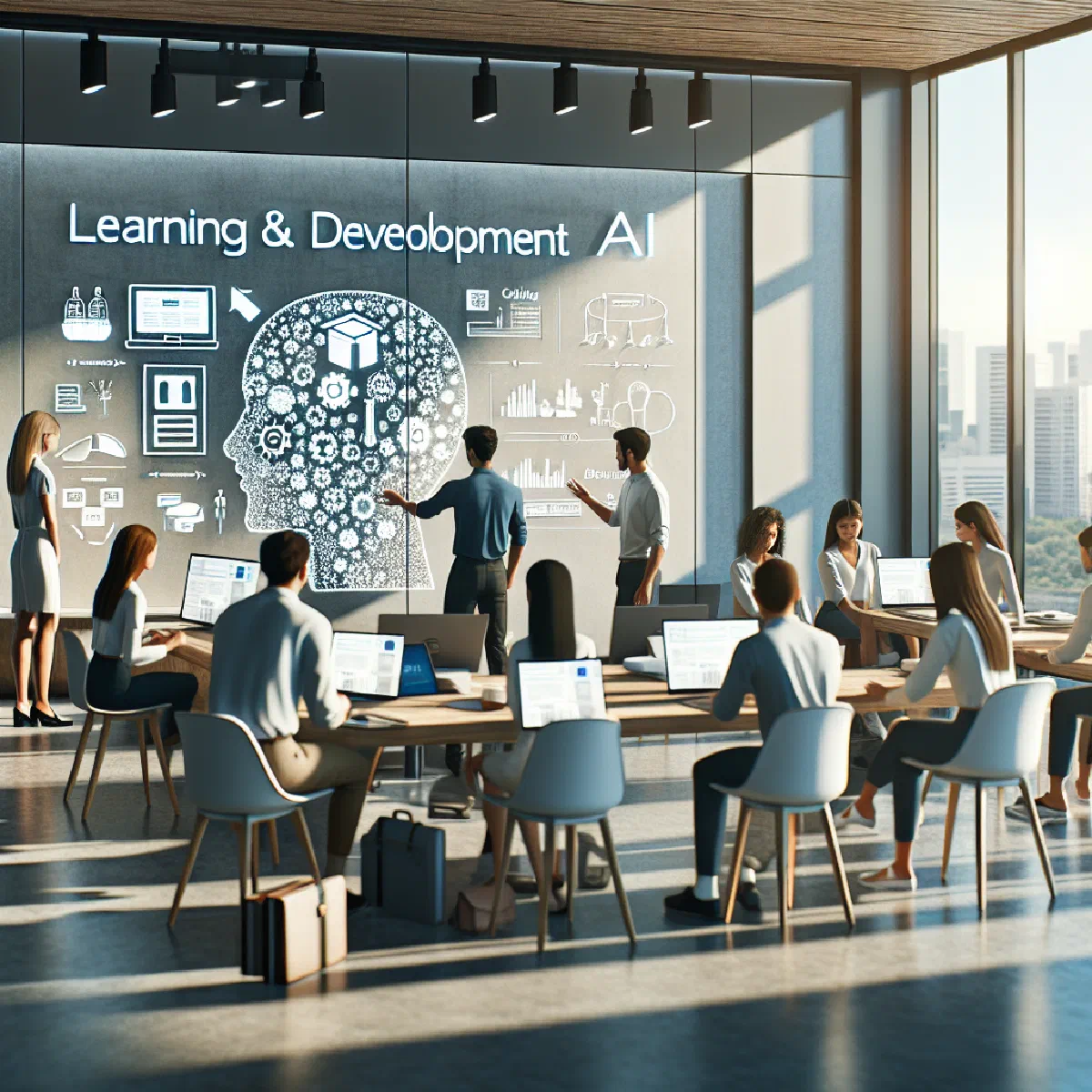
Discover how AI is revolutionizing talent management, enhancing efficiency while addressing privacy and bias concerns for a balanced future.
The article discusses how AI is evolving in the field of talent management and human resources. It explains how AI is being used for skills mapping to understand employees’ competencies and guide training and development. AI talent platforms analyze employee profiles, skills, achievements to match people with the right roles and projects. These platforms also facilitate internal mobility by identifying suitable next moves for employees.
A contrarian insight is that while AI promises enhanced efficiency, productivity and fairness in talent management, there are also risks around privacy, bias and lack of human oversight. As AI evolves, companies need to ensure transparency, auditability and accountability around their AI systems. There is still value in human expertise, judgment and discretion when dealing with people-related decisions. The goal should be for AI to augment, not replace, human talent managers. Striking the right balance will enable AI to transform talent management for the better.
Original article: https://www.forbes.com/sites/neilsahota/2023/12/04/pioneering-the-future-ais-evolution-in-talent-management/
Why customer tools are organized wrong
This article reveals a fundamental flaw in how customer support tools are designed—organizing by interaction type instead of by customer—and explains why this fragmentation wastes time and obscures the full picture you need to help users effectively.
Infrastructure shapes thought
The tools you build determine what kinds of thinking become possible. On infrastructure, friction, and building deliberately for thought rather than just throughput.
Server-side dashboard architecture: Why moving data fetching off the browser changes everything
How choosing server-side rendering solved security, CORS, and credential management problems I didn't know I had.
The work of being available now
A book on AI, judgment, and staying human at work.
The practice of work in progress
Practical essays on how work actually gets done.
The smartest code you'll ever delete
The most dangerous kind of waste isn't the thing that doesn't work. It's the thing that works beautifully and shouldn't exist.
The first real user breaks everything
Your product works until someone actually uses it. The gap between 'works in dev' and 'works for a person' is where most systems fail — and most organizations avoid looking.
The loop nobody bothers to close
Most systems observe. Almost none learn. The difference is a feedback loop — and the boring cleanup work that makes it possible.
Artificial intelligence could hit three in five workers — Possibly replacing their jobs. The warning comes in a new international monetary fund report on the future of work. It warned of lower sala…
AI could replace three in five workers, warns an IMF report, signaling potential job loss and lower salaries. Discover the implications for the future of work.
Atlassians choose where they work, every single day. Download our free report to see what we’ve learned as a result.
Explore Atlassian's insights on flexible work policies and employee satisfaction. Download the free report to learn from their distributed work experience.
The question over whether to allow employees to work from home has been settled. here’s the new normal.
Explore why the shift back to office work may fail as data supports remote work's benefits for productivity and employee well-being.