Discover how generative AI is more likely to augment jobs rather than replace them, transforming tasks and creating new opportunities for efficiency and innovation.
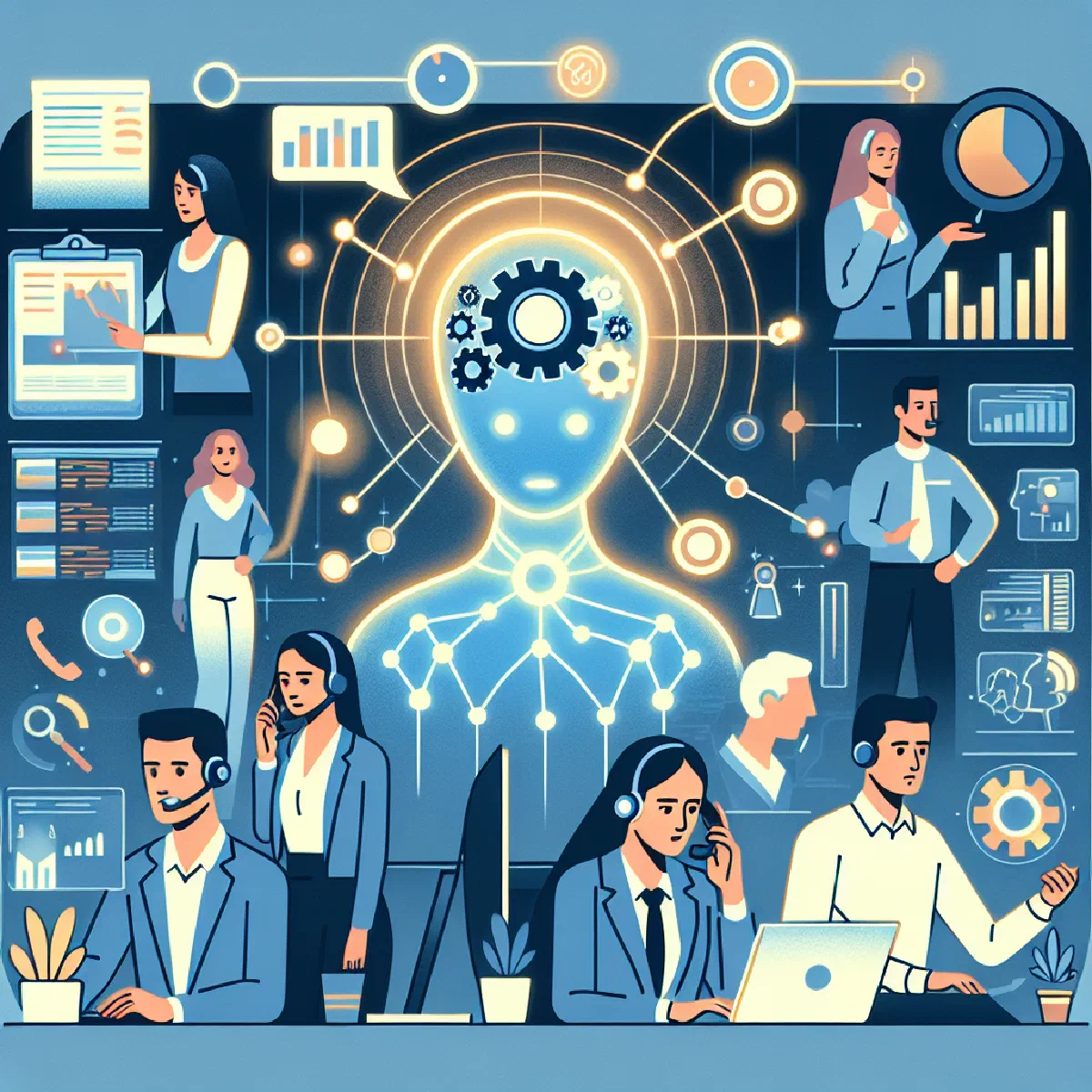
Explore how generative AI enhances jobs by automating tasks, fostering efficiency, and creating new opportunities instead of replacing human roles.
Generative AI tools like ChatGPT are driving the trend towards AI-driven automation. While many fear job losses, the impact of generative AI is more likely to be job augmentation rather than job displacement. A McKinsey report predicts that by 2030, 30% of hours currently worked in the US economy could be automated. However, only around 20% of jobs are considered “highly exposed” to generative AI automation. Jobs like customer service representatives face a higher risk of displacement, but tasks requiring human judgment and empathy will still need human intervention. On the other end of the scale, many jobs, such as teaching, healthcare, law, and software development, will integrate generative AI tools to automate repetitive tasks so that humans can focus on aspects that require uniquely human skills. In summary, rather than fearing job losses, individuals should examine their job roles to identify how generative AI could augment their work.
Why customer tools are organized wrong
This article reveals a fundamental flaw in how customer support tools are designed—organizing by interaction type instead of by customer—and explains why this fragmentation wastes time and obscures the full picture you need to help users effectively.
Infrastructure shapes thought
The tools you build determine what kinds of thinking become possible. On infrastructure, friction, and building deliberately for thought rather than just throughput.
Server-side dashboard architecture: Why moving data fetching off the browser changes everything
How choosing server-side rendering solved security, CORS, and credential management problems I didn't know I had.
The work of being available now
A book on AI, judgment, and staying human at work.
The practice of work in progress
Practical essays on how work actually gets done.
The smartest code you'll ever delete
The most dangerous kind of waste isn't the thing that doesn't work. It's the thing that works beautifully and shouldn't exist.
The first real user breaks everything
Your product works until someone actually uses it. The gap between 'works in dev' and 'works for a person' is where most systems fail — and most organizations avoid looking.
The loop nobody bothers to close
Most systems observe. Almost none learn. The difference is a feedback loop — and the boring cleanup work that makes it possible.
The game-changing impact of AI
Explore how AI is revolutionizing healthcare, finance, education, retail, and HR, creating new opportunities in 2024 and beyond.
Atlassians choose where they work, every single day. Download our free report to see what we’ve learned as a result.
Explore Atlassian's insights on flexible work policies and employee satisfaction. Download the free report to learn from their distributed work experience.
Revolutionizing academia: AI tools
Explore AI tools transforming academia with enhanced writing, research efficiency, and streamlined publishing for students and scholars alike.