Polymathic Blog
Digital transformation, higher education, innovation, technology, professional skills, management, and strategy

Innovation: innovation

38 posts tagged with "innovation"

Article Analysis: Driving Innovation: How Agile Labs Transform Modern Enterprises

“By being relatively independent, they can swiftly move from ideation to execution, ensuring that promising ideas are not bogged down by lengthy approval processes.”

The Rise Of Labs: Driving Innovation In Modern Enterprises

Understanding the Role of Innovation Labs in Modern Enterprises

In today’s rapidly evolving market, enterprises are confronted with the need to innovate swiftly while maintaining cost-efficiency and adaptability. A compelling trend is the establishment of specialized units commonly known as innovation labs or centers of excellence. These labs embody the …

 read more >

Bookmark: Why tomorrow’s breakthroughs will come from polyintelligent thinking

“Nature is far more intelligent than we humans have ever understood.”
Why tomorrow’s breakthroughs will come from polyintelligent thinking

The future of innovation hinges on polyintelligent thinking, which integrates three key intelligences: human, artificial, and nature’s intelligence. This approach moves beyond the current focus on human and AI fusions, embracing the adaptive and insightful patterns in nature as identified by luminaries like Leonardo da Vinci. Da Vinci’s work reflected an understanding that nature’s intelligence, seen in systems such as plant …

 read more >

I. Introduction

The intersection of epistemology and artificial intelligence offers fertile ground for exploration. My background in theories of knowledge and experience informs my approach to AI, particularly in questioning how AI “thinks” and how we can verify its cognitive processes. However, the practical applications of AI supersede these philosophical inquiries in my current work.

This discussion focuses on tangible, operational examples of AI applications, with particular emphasis on staff utilization and the production of outcomes at scale. The goal is not to showcase novelty items or …

 read more >

Jasper is a useful tool for developing employee training.

The article discusses various aspects of employee training and development, providing insights and recommendations on how to incorporate industry trends, cater to different learning styles, evaluate program success, create interactive training methods, and implement best practices. The author emphasizes the need to align training programs with specific business goals, adapt to employee demographics, and ensure engagement and participation. Additionally, they suggest utilizing metrics, data analysis, and innovative approaches such as gamification and simulations to enhance effectiveness. … read more >

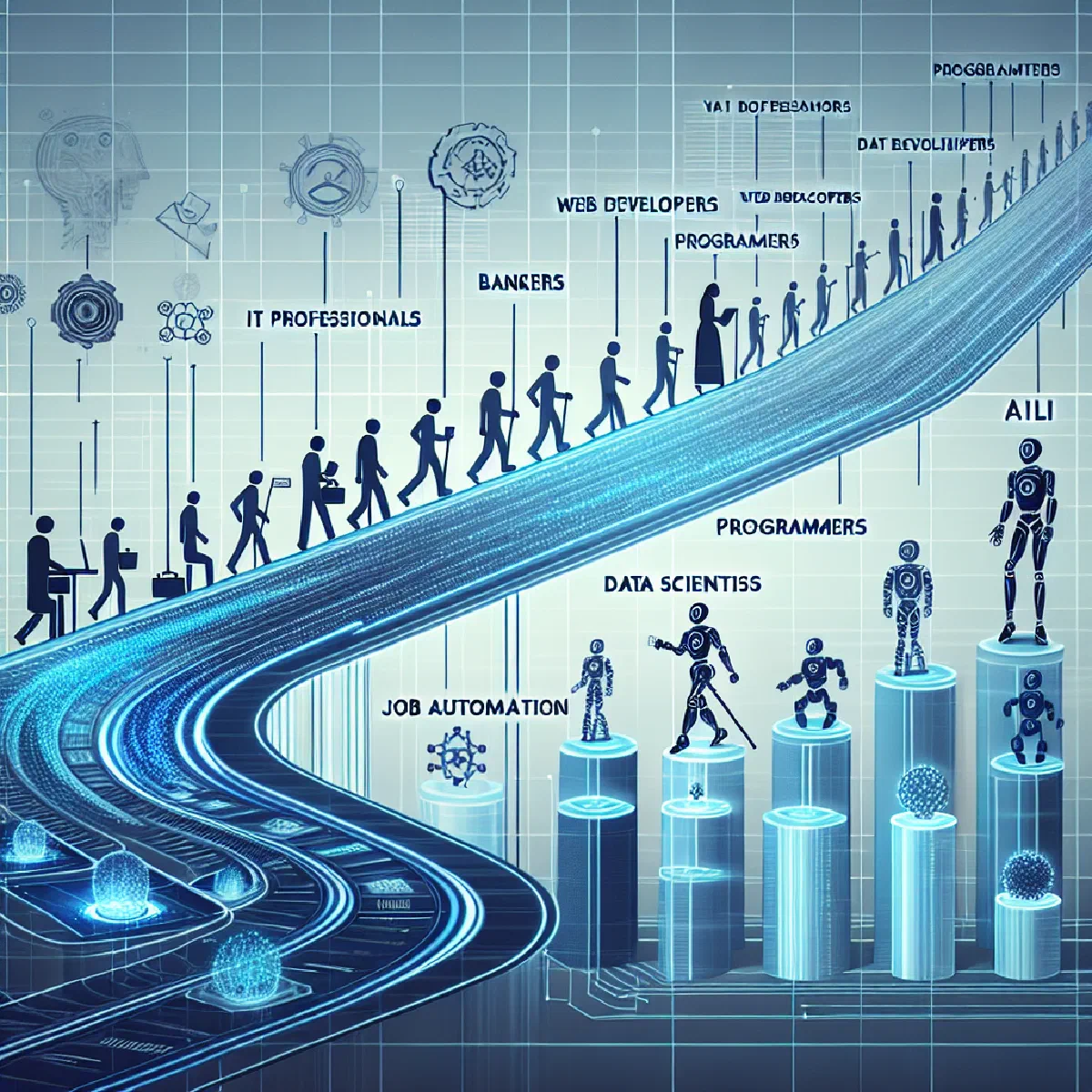
It's going to take a century for artifical intelligence to be able to perform most human jobs. But there are going to be some key developments during the next decade.

According to a survey of leading AI researchers, all human tasks may become highly automatable by 2116. While this prediction seems far off, it is worth noting that it has been moved up by 50 years from the original estimate of 2164. Short-term developments are also expected to reshape IT and business professionals’ jobs within the next five to 10 years. The survey highlights several capabilities that AI will achieve in the near future, including finding and patching security flaws, building websites, offering phone banking services, writing Python code, finetuning large language models, … read more >

Many businesses are not yet prepared to fully reap the benefits of AI.

AI has become a ubiquitous technology, with companies exploring its applications for revenue growth and improved customer and employee experiences. However, most businesses are unprepared to leverage AI to its fullest extent, limiting its potential. Only a small number of companies are successfully applying AI to improve their operations and create new value. AI-powered automation, when combined with specialized and generative AI, can boost productivity, eliminate errors, and achieve faster results. Successful examples include Cathay Pacific, British Airways, and Intel. To fully deliver on its … read more >

Rose-tinted predictions for artificial intelligence’s grand achievements will be swept aside by underwhelming performance and dangerous results.

The year 2023 saw widespread hype around generative AI, with expectations of AI-powered advancements becoming common. However, in 2024, there will be a need to readjust expectations as evidence emerges showcasing the limitations of generative AI. These models are prone to providing false information and hallucinations, making it difficult to anchor predictions to known truths. Anticipation of exponential productivity improvements and artificial general intelligence will prove unfounded, leading to a shift in focus towards identifying human tasks that can be augmented by these models. Moreover, … read more >

ARTIFICIAL intelligence could hit three in five workers — possibly replacing their jobs. The warning comes in a new International Monetary Fund report on the future of work. It warned of lower sala…

According to a new International Monetary Fund (IMF) report, artificial intelligence (AI) could potentially replace three in five workers, with some jobs potentially disappearing altogether. The IMF also warned of lower salaries and cuts in hiring as a result of AI integration. A separate study from PwC revealed that bosses in Britain are adopting AI technology at a faster rate than their counterparts in the US, China, and Europe, which could have a larger impact on British workers. The IMF also noted that while younger workers could benefit from AI, older workers may struggle to adapt. read more >

Discover how generative AI is more likely to augment jobs rather than replace them, transforming tasks and creating new opportunities for efficiency and innovation.

Generative AI tools like ChatGPT are driving the trend towards AI-driven automation. While many fear job losses, the impact of generative AI is more likely to be job augmentation rather than job displacement. A McKinsey report predicts that by 2030, 30% of hours currently worked in the US economy could be automated. However, only around 20% of jobs are considered “highly exposed” to generative AI automation. Jobs like customer service representatives face a higher risk of displacement, but tasks requiring human judgment and empathy will still need human intervention. On the other … read more >

Atlassians choose where they work, every single day. Download our free report to see what we’ve learned as a result.

Atlassian’s approach to distributed work, known as Team Anywhere, has enabled employees to choose where they work since 2020. The company’s workforce has become highly distributed, with employees collaborating from over 10,000 locations. Despite this, 92% of employees say the distributed work policy allows them to do their best work, and 91% consider it an important reason for staying at Atlassian. The company has also seen benefits such as increased representation of women in certain geographies and high visitation rates to their offices. Atlassian shares their insights and key … read more >