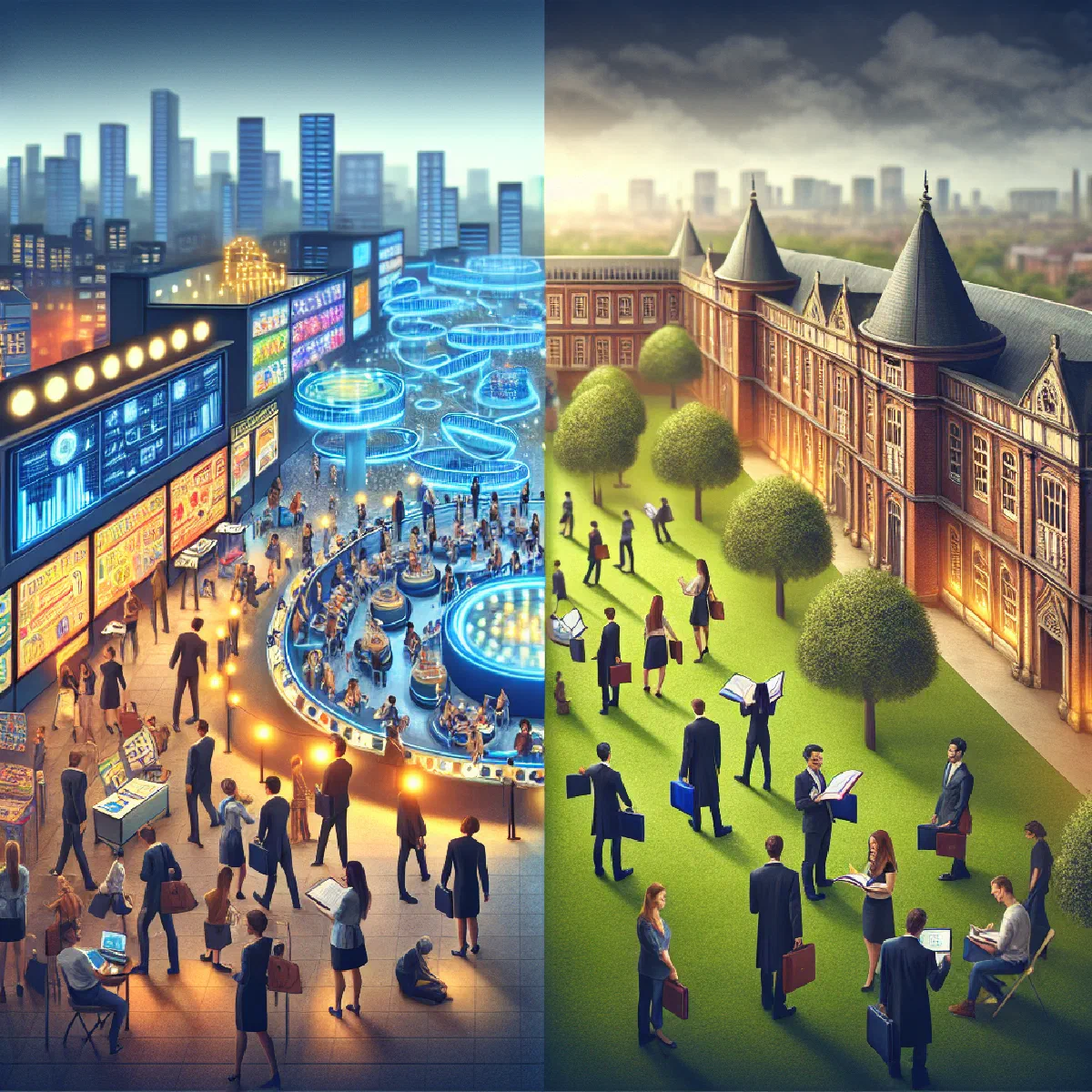
Traditional education has barely scratched the surface of the real potential for learning. What if the most effective methods haven’t even been put into practice yet? read more >
If you want a glimpse of the future, start with the numbers.
McKinsey estimates that 375 million workers worldwide will need to switch occupations by 2030. Not retrain, not take a course, but switch careers entirely. At the same time, the World Economic Forum projects that 50% of all employees will need reskilling by 2025. That’s not “someday.” That’s right now.
We are staring at a workforce transformation of staggering scale, and the truth is: our current education system is not built for it.
The Intersection of AI and Education: Navigating the Future
As artificial intelligence (AI) continues to evolve, educators face a compelling challenge: balancing the integrity of their educational practices with the necessity of preparing students for an AI-integrated workforce. Watson and Bowen’s article delves into this nuanced debate, offering profound insights that urge …
In continuing education, learning doesn’t end when the course is completed. Professionals, executives, and lifelong learners often require months of follow-up, guidance, and reinforcement to fully integrate new knowledge into their work and personal lives. Traditionally, human coaches have filled this role—whether in leadership development, career advancement, corporate training, or personal growth. However, the cost and accessibility of one-on-one coaching remain significant barriers. AI-driven coaching has the potential to bridge this gap, providing continuous, personalized …
The traditional education model has long struggled with its one-size-fits-all approach. Course content remains static, instruction is largely uniform, and personalization is limited to what an instructor can provide within the constraints of time and resources. However, artificial intelligence (AI) is now redefining curriculum design, enabling hyperpersonalized learning that adapts to individual students’ needs, abilities, and preferences. With AI-driven tools, education is shifting from rigid, standardized instruction to dynamic, student-centered learning pathways.
Marketing is a dominant force in nearly every industry, shaping consumer behavior, driving engagement, and defining brand perception. Yet, in academia, marketing remains an underdeveloped and often misunderstood function. Institutions market themselves, albeit indirectly, but rarely do they engage in the kind of targeted, strategic marketing seen in the corporate world. Academic marketing is not simply another term for college marketing, which often refers to promotional efforts directed at students through non-traditional tactics like on-campus events and giveaways. Nor is it limited to … read more >
Leading universities are increasingly preparing the future workforce by integrating digital and human skills into their curricula. With online enrollment growing faster than on-campus programs across many U.S. institutions, universities are expanding their offerings on platforms like Coursera. In 2024, nine additional universities, …
In “Scaling Evidence-based Instructional Design Expertise Using AI,” the research spearheaded by Gautam Yadav’s team at Carnegie Mellon University examines the transformative potential of AI in instructional design, particularly using Large Language Models (LLMs) like GPT-4 to bridge the gap between educational theory and practical application. The central thesis revolves around the capability of AI to scale evidence-based instructional practices traditionally limited by resources. Through two pivotal experiments, the study showcases AI’s ability to streamline the development … read more >
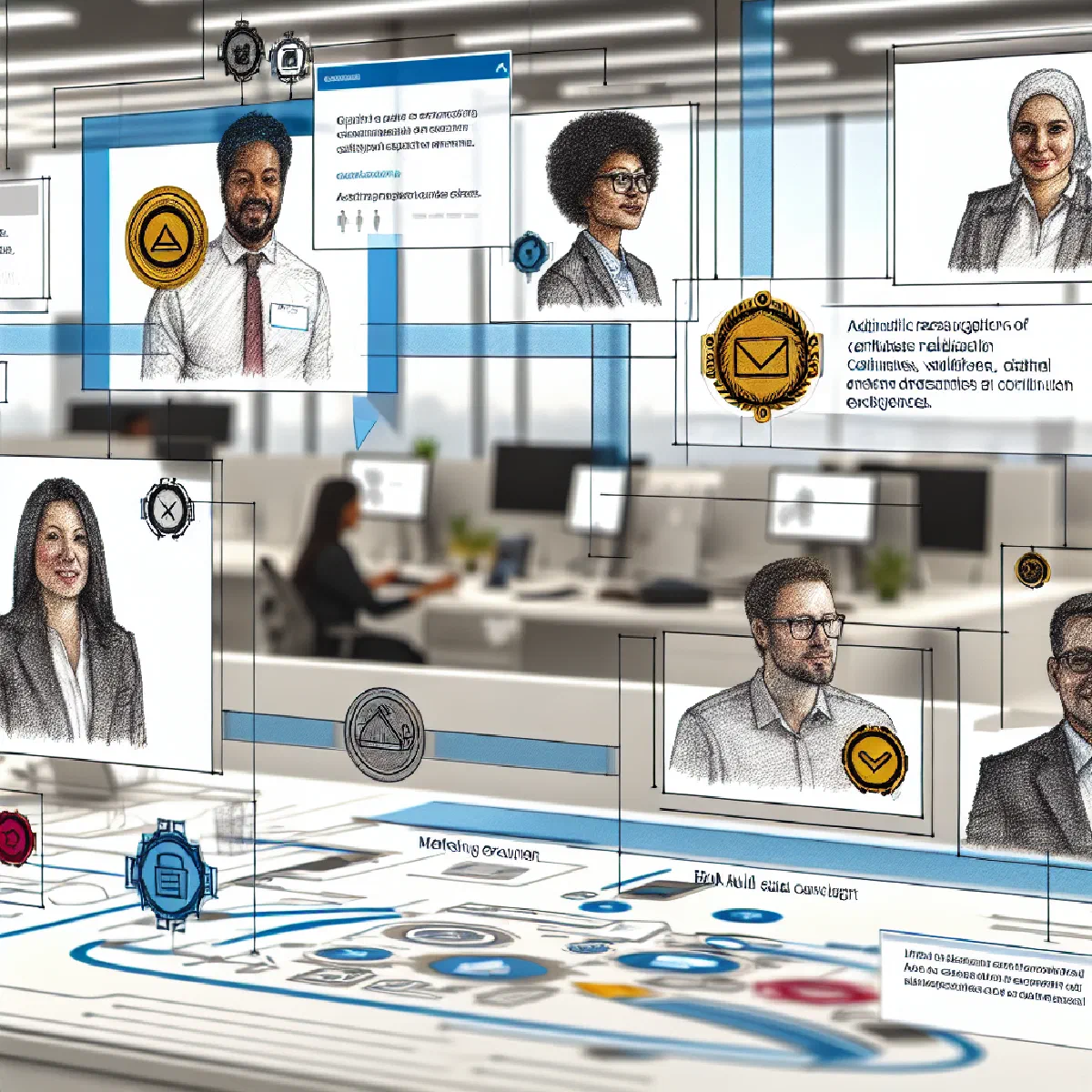
The article “The Rise Of The Micro-Credentials Movement: Validating Skills Beyond Traditional Degrees” by Aditya Malik explores how micro-credentials are emerging as a vital complement to traditional education in workforce development, emphasizing their role in addressing the growing skills gap. Malik argues that while traditional degrees …
A notable quote from the article is: “AI will strengthen a lot of the processes we already have established, whether it’s creation of material, analyzing reports, or understanding outcomes from different sessions.”
The article, “The Future Of Corporate Learning And Employee Engagement: Why Traditional Training Is Dead,” posits that traditional training methods are becoming obsolete due to the transformative impact of artificial intelligence (AI) and immersive …