Bookmark: In the age of artificial intelligence, polymaths are back in vogue
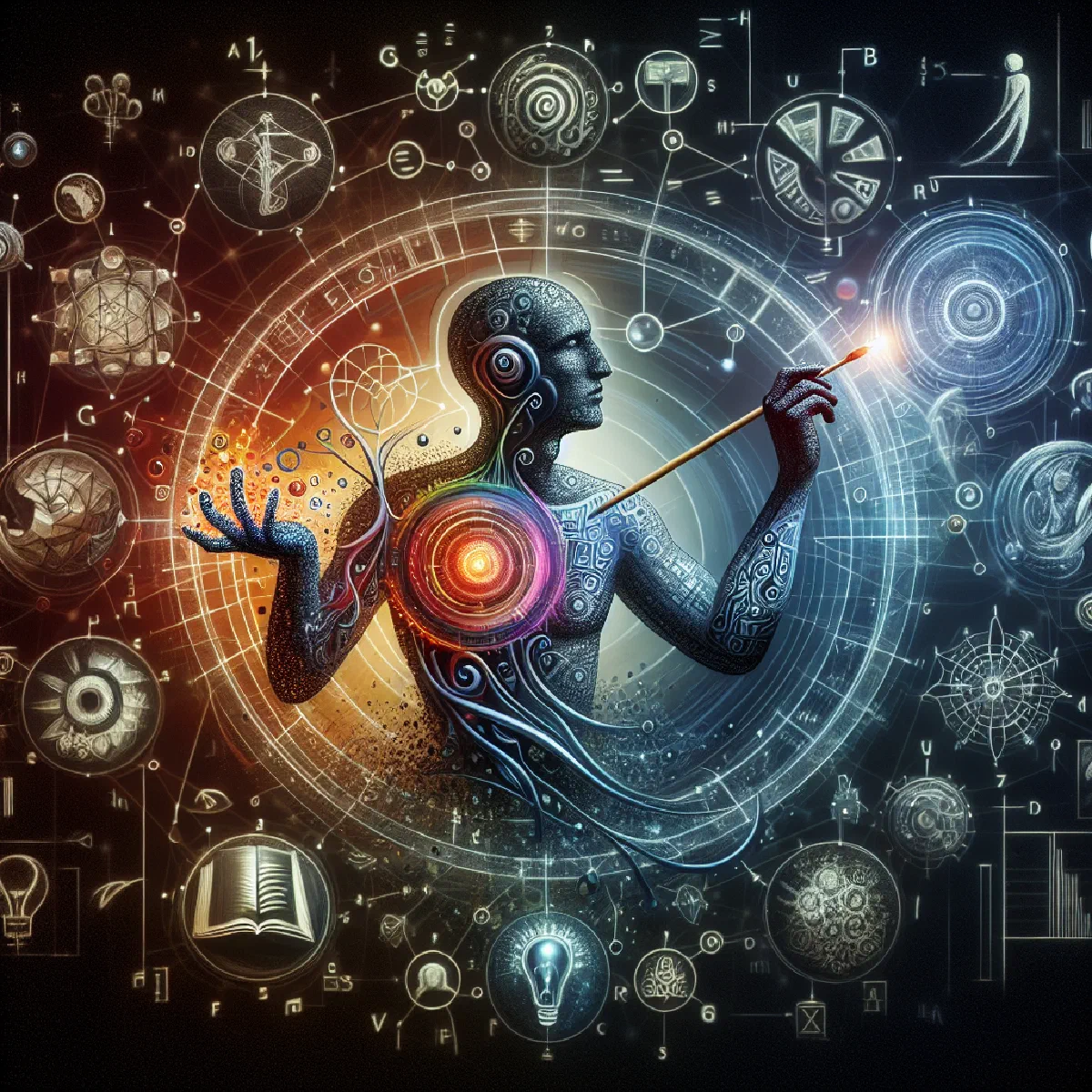
Explore how AI is reviving polymathic thinking, driving innovation across disciplines, and shaping a future grounded in curiosity and ethical responsibility.
The article “In The Age Of Artificial Intelligence, Polymaths Are Back In Vogue” argues that the intersection of AI and polymathic thinking is pivotal for future innovation. The central thesis posits that polymaths, individuals skilled in multiple disciplines, are uniquely positioned to harness AI’s capabilities to create transformative advancements across diverse fields. Historically illustrated through figures like Leonardo da Vinci and Nikola Tesla, the piece suggests these individuals would utilize AI not only for technological innovations but artistic creations as well. The resurgence of polymaths is driven by AI’s democratization of information, breaking down traditional knowledge silos and allowing broader interdisciplinary exploration. As AI facilitates access to vast knowledge, it cultivates a new wave of polymaths capable of pushing the boundaries of invention and innovation. This resurgence is contrasted against the trend of hyper-specialization, underscoring that ethical and successful AI deployment requires diverse inputs from across the professional spectrum. The article further explores the potential of AI to mimic and exceed human polymathic abilities, offering unprecedented opportunities in medicine, energy, and climate solutions. Yet, it emphasizes aligning AI’s transformative powers with humanistic values — curiosity, ethical responsibility, and a commitment to humanity’s advancement — to ensure technology serves as a force for good.
In The Age Of Artificial Intelligence, Polymaths Are Back In Vogue
Why customer tools are organized wrong
This article reveals a fundamental flaw in how customer support tools are designed—organizing by interaction type instead of by customer—and explains why this fragmentation wastes time and obscures the full picture you need to help users effectively.
Infrastructure shapes thought
The tools you build determine what kinds of thinking become possible. On infrastructure, friction, and building deliberately for thought rather than just throughput.
Server-side dashboard architecture: Why moving data fetching off the browser changes everything
How choosing server-side rendering solved security, CORS, and credential management problems I didn't know I had.
The work of being available now
A book on AI, judgment, and staying human at work.
The practice of work in progress
Practical essays on how work actually gets done.
The product changed its mind
A product pivoted its entire philosophy mid-session — from 'here's your list' to 'here's your next thing.' The code shipped in the same conversation as the idea. That's not iteration. That's something else.
Your project management tool was made for a non-human (AI) factory, not for you
Every project or task management tool on the market descends from Frederick Taylor's factory floor. The assumptions were wrong then. They're catastrophic in the Age of AI.
The last mile is all the miles
Building the product is the fun part. Deploying it, configuring auth, pasting email templates into dashboards, rotating leaked API keys — that's where the work actually lives.
Bookmark: How openai’’s new ChatGPT agent can do the research for you - access it here
Discover how OpenAI's ChatGPT Deep Research agent transforms research by autonomously gathering and synthesizing information in minutes.
Bookmark: Goodbye digital transformation, hello AI-first business transformation
Embrace AI-first transformation to innovate and streamline business operations, breaking down silos and enhancing decision-making for exponential growth.
Bookmark: What just happened
Discover Ethan Mollick's insights on transformative AI advancements, exploring how accessible technology reshapes our perceptions of work and research.