Article analysis: AI in education: Enhancing teaching, not replacing teachers
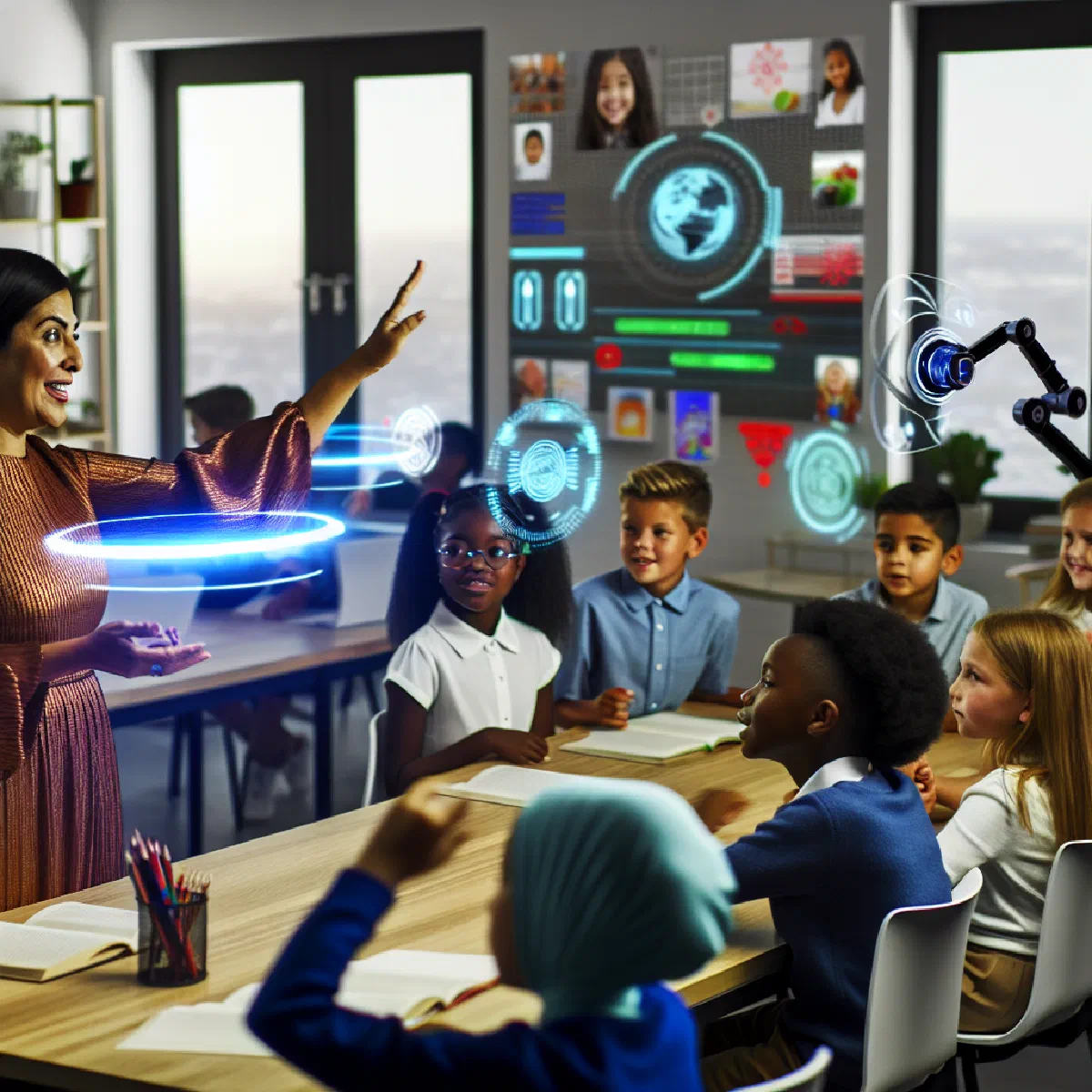
Discover how AI enhances education by supporting teachers, personalizing learning, and addressing challenges while preserving essential human connections.
“The future of education lies in the partnership between teachers and AI, not in replacing one with the other.”
Coursera CEO: AI won’t replace teachers—but it will transform education
AI in education: augmentation, not replacement
The article “Coursera CEO: AI won’t replace teachers—but it will transform education” asserts that artificial intelligence (AI) will augment rather than replace educators. This forward-thinking perspective emphasizes AI’s role in enhancing educational practices while maintaining the irreplaceable human elements of teaching such as emotional intelligence, empathy, and mentorship.
Preserving the human touch
AI can automate administrative tasks, allowing teachers to focus more on mentoring and quality education. This results-driven approach is practical for ensuring efficiency in educational settings. Examples include AI handling grading, assessment generation, and attendance tracking. Importantly, AI can identify student needs and tailor resources, offering a level of personalized education previously unattainable.
Personalizing and democratizing education
One intriguing insight is AI’s potential to democratize education, bringing high-quality learning materials to underserved regions. This collaborative and supportive role could level the playing field by providing equal learning opportunities regardless of geographic constraints. AI-powered virtual coaches and tailored resources can extend a teacher’s impact, enriching the learning experience with interactive pedagogical methods and real-time feedback.
Challenges and integrity
Notably, the article does not shy away from the challenges associated with AI in education, such as issues of academic integrity and potential misconduct. Addressing these concerns involves developing stringent standards and innovative integrity tools to maintain credibility. This thoughtful and analytical approach is crucial for ensuring that AI integration is both ethical and effective.
Future of education
The article concludes with a future-oriented vision: a partnership between AI and teachers. As AI integrates more into education, it is essential to ensure that human expertise and oversight remain central. This perspective is not only empowering but also aligns with the practical need for educators to guide the AI integration process, ensuring the preservation of the teacher-student relationship.
Why customer tools are organized wrong
This article reveals a fundamental flaw in how customer support tools are designed—organizing by interaction type instead of by customer—and explains why this fragmentation wastes time and obscures the full picture you need to help users effectively.
Infrastructure shapes thought
The tools you build determine what kinds of thinking become possible. On infrastructure, friction, and building deliberately for thought rather than just throughput.
Server-side dashboard architecture: Why moving data fetching off the browser changes everything
How choosing server-side rendering solved security, CORS, and credential management problems I didn't know I had.
The work of being available now
A book on AI, judgment, and staying human at work.
The practice of work in progress
Practical essays on how work actually gets done.
Your project management tool was made for a non-human (AI) factory, not for you
Every project or task management tool on the market descends from Frederick Taylor's factory floor. The assumptions were wrong then. They're catastrophic in the Age of AI.
The last mile is all the miles
Building the product is the fun part. Deploying it, configuring auth, pasting email templates into dashboards, rotating leaked API keys — that's where the work actually lives.
The day we shipped two products and the agents got bored
112 issues across 12 projects. Two new products went from nothing to code-complete MVP in single sessions. And the most interesting signal wasn't the speed — it was the scout that came back empty-handed.
Article analysis: Not using AI is “disservice” to students
Integrate AI in education to enhance learning and prepare students for future jobs, ensuring they thrive in an AI-driven world.
Article analysis: How video essays can transform student writing: Insights from a popular YouTube case study
Transform student writing by integrating video essays into your curriculum, enhancing engagement and building essential real-world skills.
Article analysis: Integrating generative AI in education: Enhancing learning and preparing for the future
Integrate generative AI in education to enhance learning, foster creativity, and prepare students for a technology-driven future.